Advertisement
Policy & Industry
Share
President Trump highlighted his administration’s crackdown on overseas crypto scams, reporting $833 million in intercepted crypto, 503 seized fraudulent websites, and nearly 9,000 victims notified. The campaign comes amid scrutiny of Trump’s crypto ties ahead of the midterm elections.
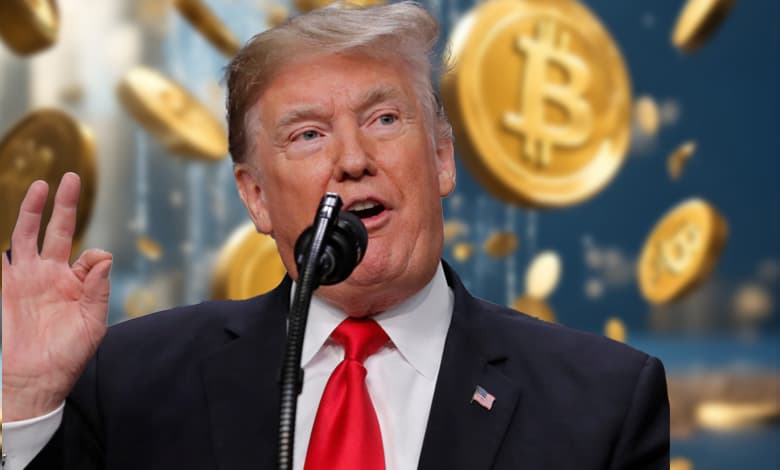
US President Donald Trump was expected to place his administration’s campaign against international criminal networks involved in cryptocurrency-related fraud at the center of a Wednesday event focused on cybercrime, according to a White House official.
The initiative comes as crypto-related scams continue to cause substantial financial losses among US citizens, with criminals operating across borders through increasingly sophisticated schemes. During the event, Trump was set to emphasize the administration’s efforts to identify, disrupt and dismantle the organizations responsible for these activities.
According to the official, transnational criminal groups have established extensive scam centers that use multiple methods to defraud victims. These operations rely on relationship-based fraud, phishing campaigns, ransomware attacks and other deceptive practices to obtain money from individuals.
The administration planned to outline how US authorities are responding to these threats, including efforts to seize illicit funds, disrupt the infrastructure supporting fraudulent activities and shut down the operations responsible for targeting American citizens.
The Trump administration has reported progress in its efforts to combat cryptocurrency-related crime through coordinated law enforcement operations.
According to the White House official, US agencies have intercepted approximately $833 million in cryptocurrency associated with overseas scams. Authorities have also seized 503 fraudulent cryptocurrency websites as part of operations conducted under the Homeland Security Task Force.
In addition to targeting criminal infrastructure and financial assets, the administration has reportedly notified nearly 9,000 US citizens that they were victims of fraudulent schemes. These notifications form part of efforts to identify individuals affected by the scams and raise awareness of the risks associated with such operations.
The measures reflect a broader strategy aimed at disrupting criminal networks at several levels, from the websites used to attract victims to the financial channels through which stolen funds are moved.
However, recovering or freezing digital assets represents only one aspect of the challenge. The international nature of these operations, combined with their ability to establish new websites and redirect financial flows, means that authorities must also address the organizational structures and infrastructure that allow the schemes to continue operating.
The administration's crackdown builds on earlier efforts by US authorities to coordinate their response to organized financial crime operating overseas.
In November 2025, the US Department of the Treasury announced the creation of a multi-agency Scam Center Strike Force. The initiative was designed to target overseas criminal operations responsible for so-called pig butchering scams, a form of fraud in which criminals establish relationships with victims before persuading them to transfer money into fraudulent investment opportunities, often involving cryptocurrency.
These schemes are frequently associated with large, well-funded criminal organizations operating in parts of Southeast Asia, including Burma, Cambodia, Laos and the Philippines. Their operations can involve extensive scam facilities, coordinated networks of perpetrators and methods designed to build trust before extracting substantial sums from victims.
The creation of the task force signaled a more coordinated approach to tackling these activities, bringing multiple government agencies into efforts to investigate criminal networks and disrupt their operations.
Rather than focusing exclusively on individual fraud cases, the initiative seeks to address the broader organizations behind them. This distinction is important because scam centers can target victims in multiple countries simultaneously, making isolated enforcement actions less effective against the networks as a whole.
Alongside law enforcement operations and asset seizures, the United States has used economic sanctions to restrict the infrastructure supporting overseas fraud.
Since 2025, US authorities have announced several sanctions measures aimed at entities and operations connected to these schemes. The measures seek to limit the ability of suspected criminal networks to maintain the websites, technology and other resources used to facilitate fraudulent activities.
By targeting the infrastructure behind the scams, authorities aim to make it more difficult for criminal organizations to attract victims, coordinate operations and move the proceeds of their activities.
This approach also highlights the importance of cooperation between financial regulators, law enforcement agencies and international partners. Because the perpetrators, victims, digital platforms and financial channels may be located in different jurisdictions, effective enforcement often requires coordination across national borders.
Nevertheless, sanctions and website seizures do not necessarily eliminate the underlying threat. Criminal groups may attempt to establish replacement websites, adopt new identities or shift their operations to other jurisdictions. Sustained enforcement and improved information-sharing are therefore essential to preventing disrupted networks from quickly re-emerging.
Despite the administration's efforts to combat cryptocurrency-related crime, Trump's own connections to the digital asset industry have become a source of political controversy.
With the US congressional midterm elections approaching in the coming weeks, cryptocurrency has taken on a more prominent role in accusations of potential conflicts of interest and self-dealing involving the president and his administration.
The contrast between the government's campaign against crypto-enabled criminal activity and the political debate surrounding Trump's personal ties to the industry creates a complicated backdrop for the administration's messaging on digital assets.
While enforcement actions against overseas scam networks may demonstrate the government's commitment to protecting consumers, questions about the president's relationships with crypto-related businesses could complicate efforts to present the administration's digital asset policies as being driven solely by public interest.
These competing narratives also illustrate the increasingly political nature of cryptocurrency regulation in the United States. Digital assets are no longer discussed exclusively in terms of financial innovation, market oversight or technological development; they have also become part of broader debates about accountability, consumer protection and the appropriate relationship between public officials and private commercial interests.
The administration's reported seizures, website takedowns and victim notifications indicate that US authorities are pursuing a multi-pronged response to international cryptocurrency fraud. Targeting financial proceeds alongside the infrastructure used by criminal organizations could make these operations more difficult to sustain, particularly when enforcement agencies coordinate across jurisdictions. However, the reported figures alone do not establish how much stolen money has ultimately been returned to victims or whether the targeted networks have been permanently dismantled.
The broader challenge is that crypto-related fraud often exploits weaknesses that extend beyond the technology itself, including social engineering, cross-border enforcement gaps and victims' limited ability to verify investment opportunities. This means that asset seizures and sanctions need to be accompanied by preventive measures, public awareness and sustained international cooperation.
At the same time, the political scrutiny surrounding Trump's crypto connections introduces a separate question of credibility. The effectiveness of the administration's anti-fraud campaign will depend not only on its ability to disrupt criminal networks but also on public confidence that enforcement decisions are consistent and free from conflicting private interests. As cryptocurrency becomes more deeply embedded in both financial markets and political debates, demonstrating measurable consumer protection alongside transparent governance may prove just as important as the scale of enforcement operations.

Disclaimer of Warranty
The information provided in this article is for general informational purposes only. We make no warranties about the completeness, reliability, and accuracy of this information. Read full disclaimer

Editor's Picks
In the Same Space

Fuze Finance Targets US Market With New Modern Treasury Stablecoin Payment Deal

Anna K.

Oct 20, 2026

6 min

US Government Transfers 12,267 BTC Worth $1 Billion in Latest Bitcoin Move
News Desk
Oct 9, 2026
5 min

Standard Chartered Signs Deal to Acquire Zodia Custody
News Desk
Oct 21, 2026
3 min
Crypto Perpetual Futures at Risk? CFTC and CME Clash in High-Stakes Legal Battle
News Desk
Oct 20, 2026
5 min