Advertisement
Policy & Industry
Share
The CFTC is urging a federal court to dismiss CME Group's lawsuit challenging the regulator's case-by-case approach to classifying crypto perpetual futures, arguing CME lacks legal standing due to insufficient evidence of financial harm. The outcome could determine whether US platforms can broadly offer perpetual futures products currently dominant in offshore markets.
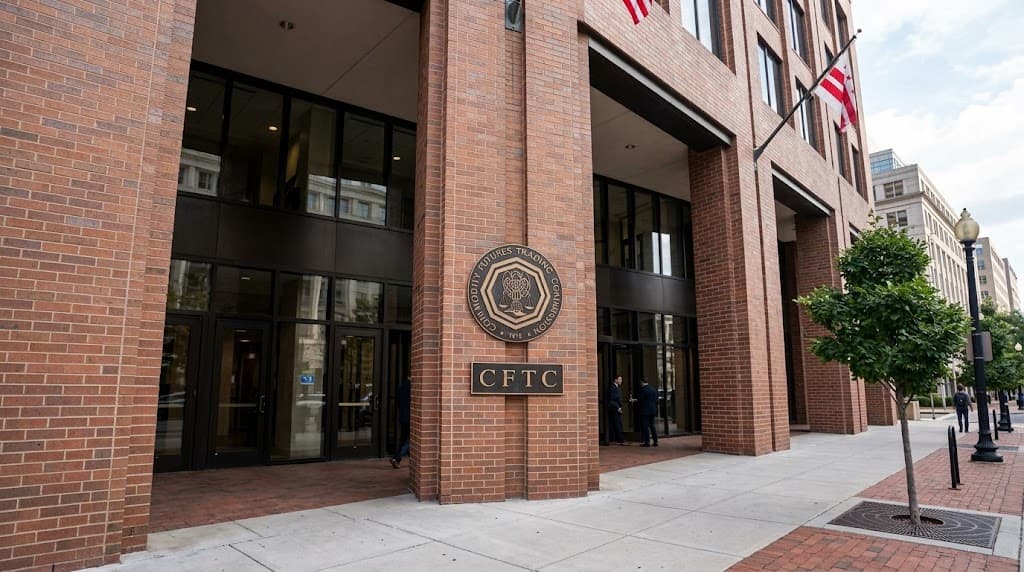
The US Commodity Futures Trading Commission (CFTC) is challenging CME Group’s legal effort to contest its approach to cryptocurrency perpetual futures, arguing that the derivatives exchange has not demonstrated that the regulator’s policy has caused or is likely to cause financial harm.
In a court filing submitted Friday, the CFTC urged a federal judge to reject CME’s challenge, saying the company has failed to establish the legal standing required to bring the case. The dispute could shape how perpetual futures are classified and regulated in the United States, with potentially significant implications for the domestic crypto derivatives market.
The conflict intensified after the CFTC opened the door to US-listed perpetual futures in May, approving a Bitcoin perpetual contract offered by Kalshi. The agency indicated that it would assess these products individually and could regulate them as futures, creating a potential pathway for a market that has largely developed outside the United States.
CME, one of the world's largest derivatives exchanges, has challenged that approach, arguing that perpetual contracts should not be treated as futures because they lack a fixed expiration date.
The CFTC’s latest filing centers on whether CME has demonstrated a sufficiently concrete injury to justify its lawsuit.
The regulator argued that claims of greater competition are not enough to establish legal standing without a plausible showing of imminent financial harm. It also pointed to CME’s own disclosures, noting that trading volumes in its cryptocurrency futures have increased since the agency clarified its approach to perpetual contracts.
The commission further argued that CME has publicly indicated it has not observed significant demand for perpetual futures and has suggested that the products are not substitutes for its existing futures offerings.
According to the filing, those statements undermine the exchange’s position in court. The CFTC contended that CME should not be able to portray perpetual contracts as a competitive threat in litigation while presenting a different assessment to investors during earnings calls.
CME representatives did not immediately respond to a request for comment on the latest filing, according to the original report.
The regulator previously asked the federal court to dismiss the lawsuit last month. Its latest submission expands on the argument that CME has not established the legal basis necessary to challenge the agency’s policy.
Perpetual futures, commonly known as perps, allow traders to speculate on an asset’s price without a predetermined expiration date. They often involve leverage and have become a major component of cryptocurrency derivatives markets outside the United States.
Traditional futures contracts generally expire on a specified date, requiring traders to close or roll over positions as the contract approaches maturity. Perpetual contracts, by contrast, are designed to remain open indefinitely, with mechanisms commonly used to keep their prices aligned with the underlying asset.
CME argues that this structural difference matters for regulatory classification. Because perpetual contracts do not expire, the exchange maintains that they should be treated as swaps rather than futures, potentially placing them under a different regulatory framework.
The CFTC has taken a more flexible approach, indicating that it will evaluate perpetual products on a case-by-case basis and may regulate them as futures.
That disagreement has implications beyond the two parties. The outcome could influence which products US trading platforms can offer, how exchanges structure crypto derivatives and whether the domestic market can compete more directly with offshore venues that already support perpetual contracts.
The agency’s policy shift also aligns with President Donald Trump’s broader push to expand cryptocurrency trading activity within the United States.
Despite the CFTC’s latest arguments, CME may retain a credible legal challenge, according to Jaret Seiberg, a policy analyst at TD Cowen.
In a client note on Monday, Seiberg suggested that CME could still make a case both for its standing as a market competitor and for classifying perpetual contracts as swaps rather than futures.
However, the longer the litigation continues, the more complicated the potential consequences could become.
Seiberg warned that the rapid growth of perpetual futures during the legal proceedings could create difficulties if CME ultimately prevails. A ruling against the CFTC’s approach could force the market to adjust after trading activity and participation have already expanded.
The concern is that the longer these products operate under the current framework, the harder it could be to reverse course without disrupting market participants.
The case remains unresolved, and the CFTC’s latest filing does not determine how the court will ultimately classify perpetual futures. Instead, it challenges CME’s ability to bring the lawsuit in the first place.
If the court dismisses the case, the CFTC’s approach to evaluating perpetual contracts individually could remain in place, potentially giving more US platforms room to introduce such products. If CME succeeds, the ruling could force regulators and exchanges to reconsider the framework governing contracts without expiration dates.
For now, the dispute highlights a broader regulatory question: whether perpetual futures should fit within existing derivatives categories or require a different approach because of their structure and market dynamics.
As trading in these products expands, the court’s eventual decision could help determine how much room the US market has to develop a domestic perpetual futures industry — and whether that growth can continue under the CFTC’s current policy.

Disclaimer of Warranty
The information provided in this article is for general informational purposes only. We make no warranties about the completeness, reliability, and accuracy of this information. Read full disclaimer

Editor's Picks
In the Same Space

France Targets Undeclared Self-Custody Wallets With Proposed €10,000 Fines

News Desk

Oct 12, 2026

6 min

IRS Clears Staking for Qualifying Crypto Trusts Under New Tax Safe Harbor
News Desk
Oct 7, 2026
4 min

Bitcoin ETFs Record $910M in Two-Week Outflow Streak as Inflation Concerns Persist
News Desk
Oct 19, 2026
4 min

Schwab Enables Crypto Transfers After Completing Bitcoin and Ether Trading Launch
News Desk
Oct 16, 2026
4 min