Advertisement
Companies & Deals
Share
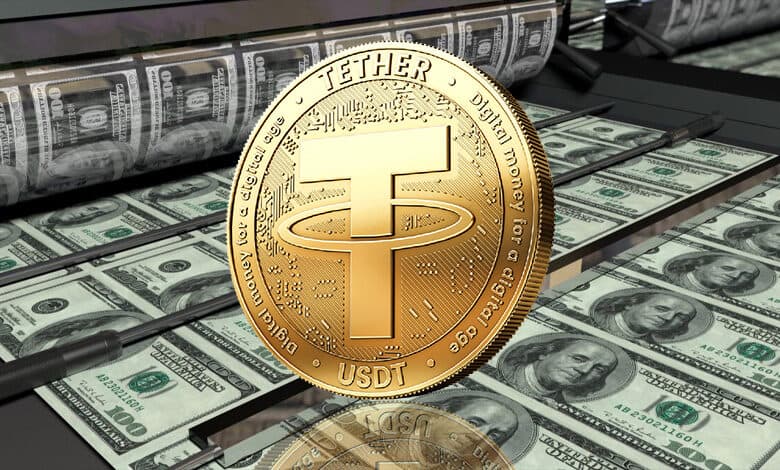
Tether froze over $344 million worth of USDT across two wallets on the Tron network on Thursday, working alongside U.S. authorities. This represents one of the largest enforcement actions ever taken by the company.
Although Tether did not publicly disclose the wallet owners, blockchain security firm PeckShield identified the addresses as TNiq9...QZH81 and TTiDL...pjSr9, holding roughly $213 million and $131 million respectively. Requests for confirmation from Tether regarding these Tron-based addresses were not immediately answered.
According to Tether, the freeze was triggered by intelligence suggesting links to sanctions evasion, organized crime, or other illegal activities. The company coordinated closely with the Office of Foreign Assets Control and additional U.S. law enforcement bodies to impose restrictions on the affected wallets.
Paolo Ardoino emphasized that USDT should not be used as a tool for unlawful activity. He stated that when credible connections to sanctioned groups or criminal operations are uncovered, Tether acts quickly and firmly.
He added that delays in enforcement by other platforms have previously resulted in weakened safeguards, user exposure, and loss of trust. In contrast, Tether’s strategy combines blockchain transparency, real-time monitoring, and direct engagement with authorities to halt suspicious funds before they are moved.
This latest action highlights Tether’s expanding compliance capabilities. The company now collaborates with more than 340 law enforcement agencies across 65 countries. To date, it has assisted in over 2,300 investigations and frozen more than $4.4 billion in assets, including $2.1 billion tied specifically to U.S. authorities.
Thursday’s freeze continues a trend of major enforcement actions. In November 2023, Tether blocked approximately $225 million in USDT connected to a Southeast Asian human trafficking and “pig butchering” scam. More recently, in January 2026, it froze around $182 million spread across five Tron wallets.
These actions often involve the Office of Foreign Assets Control, which oversees and enforces U.S. economic sanctions. The rising scale and frequency of such interventions reflect both increased misuse of stablecoins in illicit finance and Tether’s efforts to stay aligned with regulatory expectations.
Tether’s move also comes after two major crypto breaches allegedly tied to North Korean hacking groups: a $285 million attack on Drift Protocol and a $292 million exploit involving Kelp DAO.
Meanwhile, Circle faced criticism for not freezing funds related to the Drift Protocol incident. The company defended its position, stating that it can only act when directed by law enforcement or through court mandates.
Chief Strategy Officer Dante Disparte explained that asset freezes are not made arbitrarily, but strictly in response to legal requirements.
Following the Drift Protocol incident, a class-action lawsuit has been filed against Circle. In response, Drift recently announced plans to shift away from USDC in favor of USDT as part of a recovery initiative backed by Tether. The plan includes $148 million in funding aimed at compensating affected users.
This episode reinforces how compliance is becoming a key differentiator in the stablecoin market. Tether is positioning itself not just as a liquidity provider, but as an active enforcement partner capable of rapid intervention, something that increasingly matters to regulators and institutional players. At the same time, the contrasting stance taken by Circle highlights a deeper industry divide: whether stablecoin issuers should act proactively or strictly within legal mandates. As scrutiny intensifies and illicit activity continues to intersect with decentralized finance, the ability to balance speed, transparency, and legal compliance may ultimately shape which issuers gain long-term trust and dominance.

Disclaimer of Warranty
The information provided in this article is for general informational purposes only. We make no warranties about the completeness, reliability, and accuracy of this information. Read full disclaimer

Editor's Picks
In the Same Space

Sberbank Wins Russia Approval to Trade Bitcoin and Crypto

News Desk

Oct 15, 2026

4 min
Standard Chartered Signs Deal to Acquire Zodia Custody
News Desk
Oct 21, 2026
3 min
OCC Finalizes GENIUS Act Rules for Stablecoin Issuers
News Desk
Oct 21, 2026
3 min

OKX Extends Account-Hacking Protection to US Users
News Desk
Oct 21, 2026
3 min