Advertisement
Stablecoins & Payments
Share

WA
CEO & Editor-in-Chief


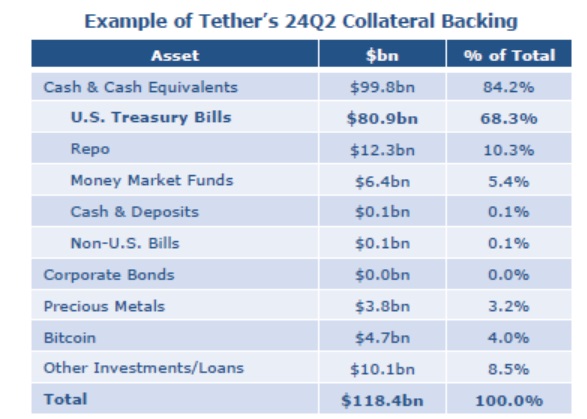
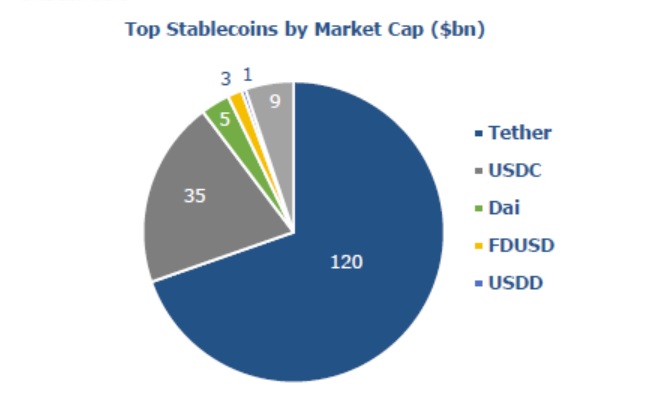
Stablecoins, digital assets pegged to traditional currencies, are rapidly transforming from niche cryptocurrencies into integral components of the global financial system. According to the October 2024 Treasury Presentation to the Treasury Borrowing Advisory Committee (TBAC), stablecoins now hold about 2.5% of U.S. Treasury bills (T-bills)—around $120 billion. This demand signals not only the growing intersection of digital and traditional finance but also how America’s historical role as the bank of the world is extending into the digital asset space.
Stablecoins are designed to maintain a stable value by being backed by highly liquid assets, primarily U.S. dollars and Treasury bills. Fiat-backed stablecoins like Tether (USDT) and USD Coin (USDC) use T-bills to ensure stability, mirroring how foreign governments and financial institutions use U.S. dollar reserves. The October TBAC report highlighted that this demand for T-bills reflects how dollar-backed stablecoins are extending the U.S. dollar’s influence into new financial ecosystems, reinforcing America’s status as the world’s financial anchor.
Today, stablecoins are involved in more than 80% of crypto transactions and act as a key liquidity source in the decentralized finance (DeFi) world. By holding T-bills, stablecoin issuers help stabilize their assets and fulfill the needs of a rapidly growing market, linking America’s Treasury market with digital finance in a new way.
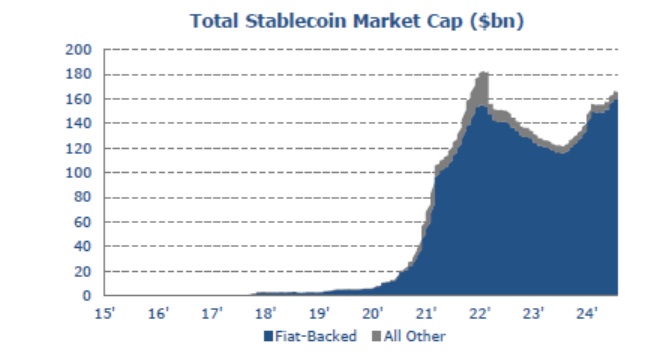
As stablecoins become more entwined with the U.S. financial system, maintaining transparency and stability becomes crucial. Some of the primary challenges outlined in the October TBAC study include:
As stablecoins become a bridge between digital and traditional finance, they further solidify the U.S. dollar's position in global finance. The TBAC report suggests that if stablecoin adoption continues to expand, this may influence both Treasury market dynamics and global perceptions of the dollar as a safe-haven asset. As the U.S. explores regulatory options, it must strike a balance between maintaining stability in both stablecoin and Treasury markets, all while embracing the opportunities stablecoins offer for global dollar accessibility.

Disclaimer of Warranty
The information provided in this article is for general informational purposes only. We make no warranties about the completeness, reliability, and accuracy of this information. Read full disclaimer

Editor's Picks

The Missing Orchestration Layer Holding Back Institutional Digital Assets

Julian Sawyer

Aug 18, 2026

5 min

Beyond Crypto Access: How ARP Digital Is Building the UAE’s Digital Capital Infrastructure
Anna K.
Aug 17, 2026
8 min

Exclusive: Flipster GM Benjamin Grolimund Discusses Full VARA License and UAE Growth
Anna K.
Aug 4, 2026
4 min
Read More Articles

In the Same Space

Tether KPMG Audit Raises the Bar for Stablecoins—and UAE
Walid Abou Zaki
Aug 14, 2026
9 min
The Global Stablecoin Race: How Central Banks Are Responding?
Chantal Assi
Aug 14, 2026
4 min

U.S. Accounting Board Proposes Treating Some Stablecoins as Cash Equivalents
News Desk
Aug 19, 2026
2 min
Beyond Crypto Access: How ARP Digital Is Building the UAE’s Digital Capital Infrastructure
Anna K.
Aug 17, 2026
8 min