Advertisement
Regulation & Policy
Share
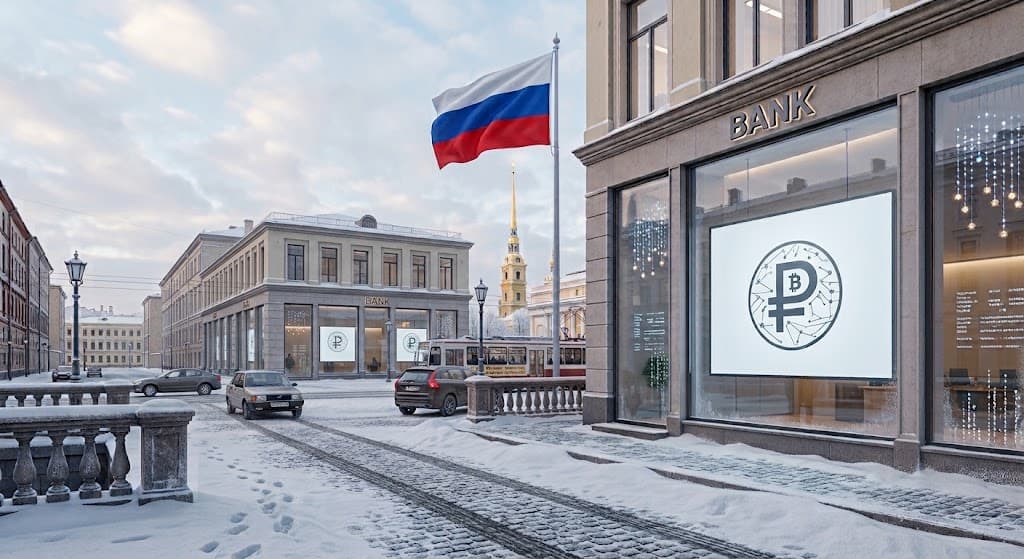
Russia will end direct peer-to-peer cryptocurrency trading between individuals on July 1, 2027, requiring residents to use authorized intermediaries. The regulatory framework also restricts transfers from regulated digital accounts to personal noncustodial wallets.
In guidance updated on Oct. 12, the Bank of Russia clarified that Article 30 of Federal Law No. 282-FZ allows individuals to trade cryptocurrencies directly with one another only until July 1, 2027.
After that date, residents will be required to conduct transactions through authorized providers or deal directly with approved market participants, including licensed brokers and registered cryptocurrency exchange operators.
For individuals who currently buy or sell digital assets directly with other people, June 30, 2027, will be the final day to use this trading method.
The central bank distinguishes between brokers licensed by the Bank of Russia and cryptocurrency exchange operators listed in its official register. Its website also provides access to participant registers and a verification service that allows users to check a provider’s regulatory status.
Russia’s main cryptocurrency regulatory framework took effect on Sept. 1, bringing trading, custody and investor access under central bank oversight. The legislation also gives existing businesses a transition period to secure the required approvals and adjust their operations.
Separate requirements apply to companies operating under transitional provisions. According to crypto.news’ Oct. 7 report, Russia had registered its first cryptocurrency exchanges and digital custodians, with four exchange operators and five digital depositories entering the supervised market.
The report, which covered the central bank’s announcement, stated that registered firms must immediately comply with transaction and recordkeeping rules. Participants admitted through the transitional process have until Sept. 1, 2027, to satisfy the remaining operational requirements.
The initial exchange register included VTB, Zefir, Sistema Crypto and T Invest Lab. The digital depository register listed Sberbank, VTB, Atomyze, Voltari and Cloud Infrastructure.
The October guidance also clarifies whether individuals can move cryptocurrency from a regulated digital account to a noncustodial wallet they control themselves.
Citing Part 9 of Article 31, the Bank of Russia states that these transfers are not allowed. The restriction applies when cryptocurrency is withdrawn from a regulated account into a wallet whose private keys are controlled by the individual.
The regulator also refers to Part 5 of Article 31 to prohibit transfers between individuals through address identifiers managed by a digital depository, including transfers resulting from transactions between customers holding accounts with that depository.
These provisions concern specific transfer methods rather than establishing a blanket prohibition on owning a personal wallet.
Under the central bank’s description, digital depositories maintain records of cryptocurrency holdings and transfers and manage customer access to the addresses associated with their assets.
Exchange operators have a distinct function. According to the regulator’s October registration announcement, they can buy and sell digital currencies in their own name and with their own funds outside organized trading venues.
Russia’s framework also differentiates between qualified and non-qualified investors using authorized intermediaries.
Under the rules described in the original report, non-qualified investors must pass an assessment before purchasing eligible cryptocurrencies. Their annual purchases are capped at 300,000 rubles through each intermediary.
Qualified investors are also required to complete testing, but they are not subject to the same annual purchase limit.
The publication’s July 29 report on the central bank’s draft rules for cryptocurrency exchanges and digital depositories outlined additional proposed operating requirements, including provisions covering digital currency accounts and the registration of market participants.
According to the July report, the draft rules proposed minimum equity requirements of between 50 million and 250 million rubles for digital depositories, depending on the services they provide.
The central bank also proposed that this capital remain liquid and consist of financial assets with high credit quality.
These proposed standards would establish financial requirements for digital depositories alongside the broader registration and operating rules governing Russia’s supervised cryptocurrency market.
Russia’s framework allows exporters and importers to use cryptocurrency wallets for cross-border transactions under the applicable rules. However, cryptocurrency payments for ordinary goods and services within Russia remain prohibited.
Residents carrying out transactions abroad are also subject to separate requirements concerning foreign accounts and intermediaries. These include obligations to report cryptocurrency assets held overseas to Russian tax authorities.
International participants must also consider sanctions restrictions. The U.S. Treasury Department’s Office of Foreign Assets Control states that Russia-related sanctions apply to cryptocurrency transactions as well as transfers involving traditional currencies.
According to OFAC, U.S. persons, wherever located, including businesses processing cryptocurrency payments, must avoid prohibited transactions and attempts to circumvent applicable sanctions.
Russia’s approach is moving cryptocurrency activity toward a system in which access increasingly depends on registered intermediaries, investor classifications and restrictions on asset transfers. The July 2027 deadline for direct peer-to-peer trading is one part of a broader framework that also governs custody, market participation and cross-border use.
The distinction between allowing cryptocurrency ownership and restricting specific transaction routes will be central to the rules’ impact. While authorized exchanges and brokers may provide a regulated path for buying and selling digital assets, restrictions on transfers to self-custody wallets could limit users’ control over how they hold and move their holdings. The practical impact will depend on implementation, access to authorized providers and regulatory enforcement.

Disclaimer of Warranty
The information provided in this article is for general informational purposes only. We make no warranties about the completeness, reliability, and accuracy of this information. Read full disclaimer

Editor's Picks
In the Same Space

Sberbank Wins Russia Approval to Trade Bitcoin and Crypto

News Desk

Oct 15, 2026

4 min

Philippines’ Largest Crypto Exchange Faces License Threat Over Gambling Links
News Desk
Oct 14, 2026
3 min

Who Gets the $5B Bitcoin Fortune? UK Ruling Complicates Victims’ Fight
News Desk
Oct 13, 2026
6 min

3iQ Secures In-Principle ADGM Approval for UAE Expansion
News Desk
Oct 12, 2026
3 min