Advertisement
Regulation & Policy
Share
Hong Kong has taken a decisive step in its digital asset strategy, granting its first stablecoin issuer licenses to HSBC and Anchorpoint Financial, a consortium backed by Standard Chartered and Animoca Brands.
The approvals, issued by the Hong Kong Monetary Authority under the Stablecoins Ordinance that came into force in August 2025, mark the first live implementation of Hong Kong’s regulated stablecoin framework.
“We look forward to the issuers launching business according to their plans, exploring growth opportunities while properly managing risks,” said Eddie Yue, HKMA Chief executive, in an announcement .
He added that regulated stablecoins are expected to “address pain points in financial and economic activities, create value for both individuals and businesses, and support the healthy development of digital assets in Hong Kong.”
The initial cohort is intentionally small. Out of 36 applicants, regulators selected only a handful, reflecting a policy approach that prioritizes balance sheet strength, reserve quality, and compliance infrastructure over rapid market expansion.
The decision to license Hong Kong’s note-issuing banks first is not incidental. Both HSBC and Standard Chartered are among the limited group of institutions authorized to issue Hong Kong dollar banknotes—a system that predates the modern central banking framework.
Under this model, banks deposit U.S. dollars with the Exchange Fund and receive Certificates of Indebtedness, against which physical currency is issued. The structure effectively ties private issuance to sovereign backing.
Eddie Yue has previously drawn a direct parallel between that system and stablecoins. In earlier commentary, he described pre-1935 privately issued banknotes—backed by deposited silver—as a form of “private money,” positioning stablecoins as their blockchain-based successor.
The implication is clear: Hong Kong is not treating stablecoins as an external innovation to regulate, but as a continuation of existing monetary architecture, adapted for digital rails.
Hong Kong’s bank-led approach to stablecoin issuance is not emerging in isolation. A similar structural pattern can be observed in the Central Bank of the United Arab Emirates and within financial zones such as Abu Dhabi Global Market, where stable-value instruments and digital asset frameworks are being anchored around regulated financial institutions rather than unregulated or standalone crypto-native issuers.
While Dubai’s Virtual Assets Regulatory Authority has introduced a dedicated regulatory layer for virtual assets, the core monetary and payment functions in the UAE remain closely tied to central bank oversight. This creates a structure where innovation is permitted, but within clearly defined institutional boundaries.
In that sense, Hong Kong’s licensing decisions reinforce a broader global trend: stablecoins are increasingly being integrated into traditional financial architecture, rather than developing as parallel systems outside it.
The framework accompanying Hong Kong licenses is among the strictest globally. Under HKMA guidelines, stablecoin transfers are limited to wallets that have undergone full identity verification, with anti-money laundering requirements embedded at the protocol level.
Transfers above HK$8,000 (~$1,000) trigger travel rule obligations, aligning stablecoin activity with traditional financial surveillance standards.

Hong Kong Becomes Battleground for Stablecoin Licenses as Global Banks Line Up
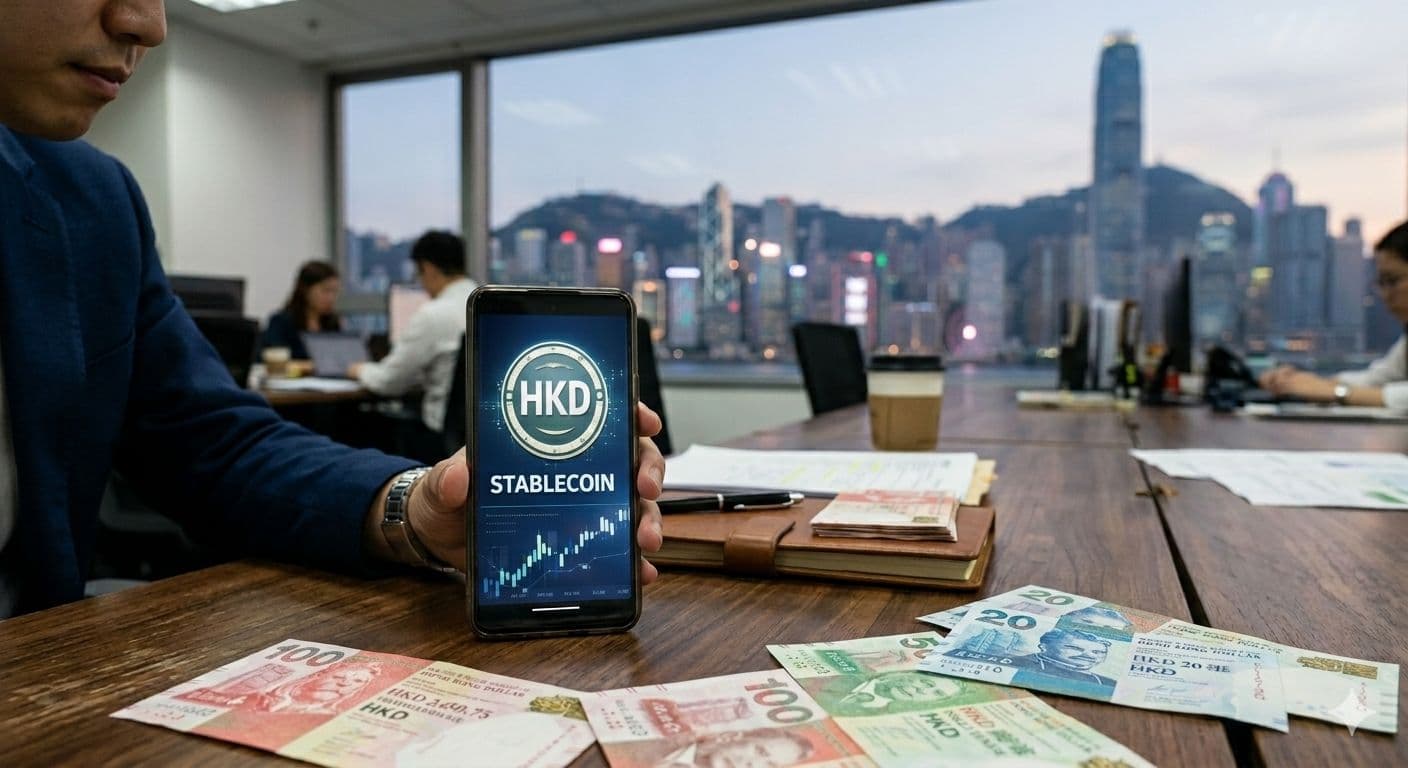
3 minIn practice, this creates a structurally different asset class. Unlike widely used tokens such as USDT or USDC, Hong Kong dollar stablecoins will likely operate within permissioned networks, where smart contracts enforce whitelisting and transaction eligibility.
This is not a design choice aimed at retail adoption or open network effects. It is a framework built for regulated financial flows, where compliance is embedded rather than layered on.
The licensing move also reflects a broader policy decision. Following a multi-phase pilot involving 11 groups, the HKMA has deprioritized a retail central bank digital currency, concluding that the use case remains limited.
Instead, attention has shifted toward bank-issued stablecoins and tokenized deposits as the more viable path for digital money in Hong Kong’s financial system.
This pivot was already visible in recent industry forums, where stablecoins, rather than CBDCs, dominated discussions around the future of payments and settlement.
Executives, including Bill Winters, have framed this model as foundational to a new phase of cross-border trade, where programmable money issued by regulated institutions could streamline settlement and reduce friction in international commerce.
Despite the regulatory clarity, Hong Kong’s model enters a market defined by dollar dominance. Stablecoins today represent a roughly $300+ billion asset class, with USD-pegged tokens accounting for the overwhelming majority of liquidity and usage.
Non-dollar stablecoins have historically struggled to achieve scale, largely due to the network effects that reinforce the dollar’s role in global finance.
Hong Kong’s strategy is to counter that dynamic not through scale alone, but through institutional trust and regulatory integration—issuing Hong Kong dollar stablecoins through banks already embedded in global trade finance.
The question is whether that approach can generate sufficient adoption beyond niche use cases such as regional trade settlement or tokenized financial flows.
Hong Kong’s first stablecoin licenses signal a clear regulatory philosophy: build the system before chasing scale.
By anchoring issuance to licensed banks, embedding compliance at the protocol level, and aligning stablecoins with existing monetary frameworks, the HKMA is effectively defining stablecoins as regulated financial infrastructure, not open crypto instruments.
That approach may limit short-term growth compared to more permissive jurisdictions. But it positions Hong Kong to integrate stablecoins directly into its banking and payments ecosystem, rather than allowing parallel systems to emerge.
The outcome will depend on whether this tightly controlled model can extend beyond institutional use and generate meaningful transaction volume. If it does, Hong Kong may offer a blueprint for how traditional financial centers incorporate stablecoins without ceding control of monetary architecture.
If it does not, the market may continue to consolidate around more flexible, dollar-denominated alternatives operating outside similar constraints.

Disclaimer of Warranty
The information provided in this article is for general informational purposes only. We make no warranties about the completeness, reliability, and accuracy of this information. Read full disclaimer

Editor's Picks

When Assets Move—or Stop—Without Consent: The Limits of Crypto Wallet Control

Walid Abou Zaki

Sep 29, 2026

6 min

Where Do the Dollars Behind the UAE’s Crypto Economy Sit?
Anna K.
Sep 21, 2026
9 min

As U.S. Crypto Legislation Stalls, Circle Launches Its Own Financial Network
Walid Abou Zaki
Sep 16, 2026
9 min
Read More Articles

In the Same Space
Hong Kong Prepares to Rewrite the Rules for Virtual Assets, Licensing Bill Planned for 2026
News Desk
Oct 5, 2026
4 min

Hong Kong Targets $2.6B Multi-Currency Digital Bond Sale
News Desk
Sep 24, 2026
3 min
FinCEN Withdraws Proposed Rules on Crypto Mixers and Self-Hosted Wallets
News Desk
Oct 6, 2026
5 min

UAE FIU and VARA Join Forces to Crack Down on Virtual Asset Crime
News Desk
Oct 5, 2026
3 min