
Advertisement
Tokenization & RWA
Share
In a recent speech at the Bundesbank Symposium, European Central Bank (ECB) Executive Board Member Piero Cipollone advocated for the establishment of a "European ledger"—a digital infrastructure aimed at consolidating digital assets and money across Europe.
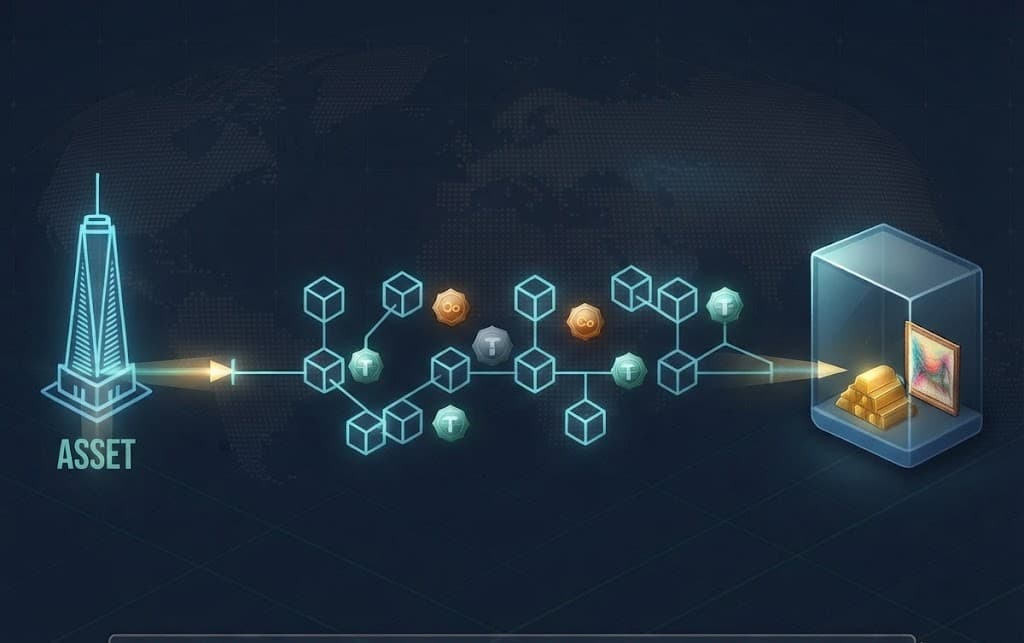
He emphasized that the digital ledger could streamline financial markets by bringing tokenized assets, such as central bank money, commercial bank money, and other digital assets, onto a shared, programmable platform.
Cipollone pointed out the longstanding issues facing the EU’s traditional capital markets, such as regulatory fragmentation and lack of cohesion. These issues have hindered the formation of a Capital Markets Union, an initiative aimed at unifying capital markets within the EU.
According to Cipollone, transitioning to a Digital Capital Markets Union offers a unique opportunity for the EU to create a more integrated financial system and adopt a flexible, forward-looking approach.
A European ledger could facilitate a variety of applications, including the issuance, settlement, and custody of digital assets, all within a single platform. Cipollone compared the concept to the EU’s current securities settlement system, T2S, which he believes could evolve into a distributed ledger technology (DLT)-based infrastructure. By centralizing financial market activity in this way, he argued, the platform could reduce costs and allow for continuous, round-the-clock operations.
The proposed ledger would provide the foundational infrastructure—the “rails”—for digital transactions, while market participants would contribute the “trains,” or the specific assets and services on the platform.
Cipollone stressed that central banks must play a crucial role in ensuring financial stability by maintaining a robust and liquid form of settlement money, particularly in a digital market landscape.
Despite the promise of DLT and tokenization, Cipollone warned of several risks, particularly the potential for market fragmentation. Current efforts to issue digital assets on various platforms have resulted in an increasingly siloed financial ecosystem, one where national regulatory differences could further isolate liquidity pools.
Cipollone suggested that a coordinated EU-wide approach to DLT could prevent this fragmentation.
He also highlighted the importance of providing central bank money on DLT-based platforms. Without it, market participants might resort to using stablecoins or tokenized deposits, which could introduce additional risks. Moreover, as financial intermediation evolves through tokenized assets, new types of risks—such as liquidity and volatility—could arise, potentially exacerbating market instability.
Cipollone noted the challenge of selecting a singular technological path. While adopting a unified DLT framework might streamline processes, it could also stifle innovation. He advocated for a more flexible approach, where various technologies are allowed to coexist, potentially interoperating across different networks. This approach, he said, might sacrifice some efficiencies but would encourage innovation by avoiding an overly prescriptive technological mandate.
To address these challenges, the ECB is coordinating trials with the Eurosystem to test wholesale DLT settlements. With participation from over 60 private-sector institutions, these trials reflect a high level of industry interest in DLT-based solutions.
Cipollone emphasized that the ECB intends to build upon the insights gained from these trials, which may involve extending them or making certain aspects permanent. Additionally, the ECB is considering the use of DLT-based assets as collateral within the Eurosystem, following in the footsteps of the Swiss National Bank’s successful wholesale CBDC trials.
A major driver for the ECB’s focus on digital assets is Europe’s need to maintain sovereignty over its financial infrastructure, especially as global payment systems become increasingly dominated by non-European companies like Visa and Mastercard. Cipollone expressed concerns that, should the EU fail to innovate quickly, financial activities might migrate elsewhere, weakening Europe’s position in global capital markets.
Cipollone concluded his address by underscoring the ECB’s commitment to shaping a more efficient, resilient, and innovative financial future for Europe. By embracing DLT and tokenization, he argued, the EU has an unprecedented opportunity to drive the evolution of capital markets and ensure that central bank money remains an essential component of financial stability in the digital era.

Disclaimer of Warranty
The information provided in this article is for general informational purposes only. We make no warranties about the completeness, reliability, and accuracy of this information. Read full disclaimer

Editor's Picks
In the Same Space
Securitize and Cantor Fitzgerald Bring Tokenization to Onchain Capital Raising

News Desk

Jul 16, 2026

3 min

AFX Bridge Exploit Drains $24M in USDC on Arbitrum
News Desk
Jul 23, 2026
2 min

Michael Saylor Launches 110-Point Case Urging Bitcoin Community to Reject BIP-110 Ahead of Critical Soft Fork
News Desk
Jul 20, 2026
5 min

Former Ethereum Foundation Privacy Researchers Launch EthSystems to Build Institutional Confidentiality Layer
News Desk
Jul 15, 2026
3 min