Advertisement
Web3 & Development
Share
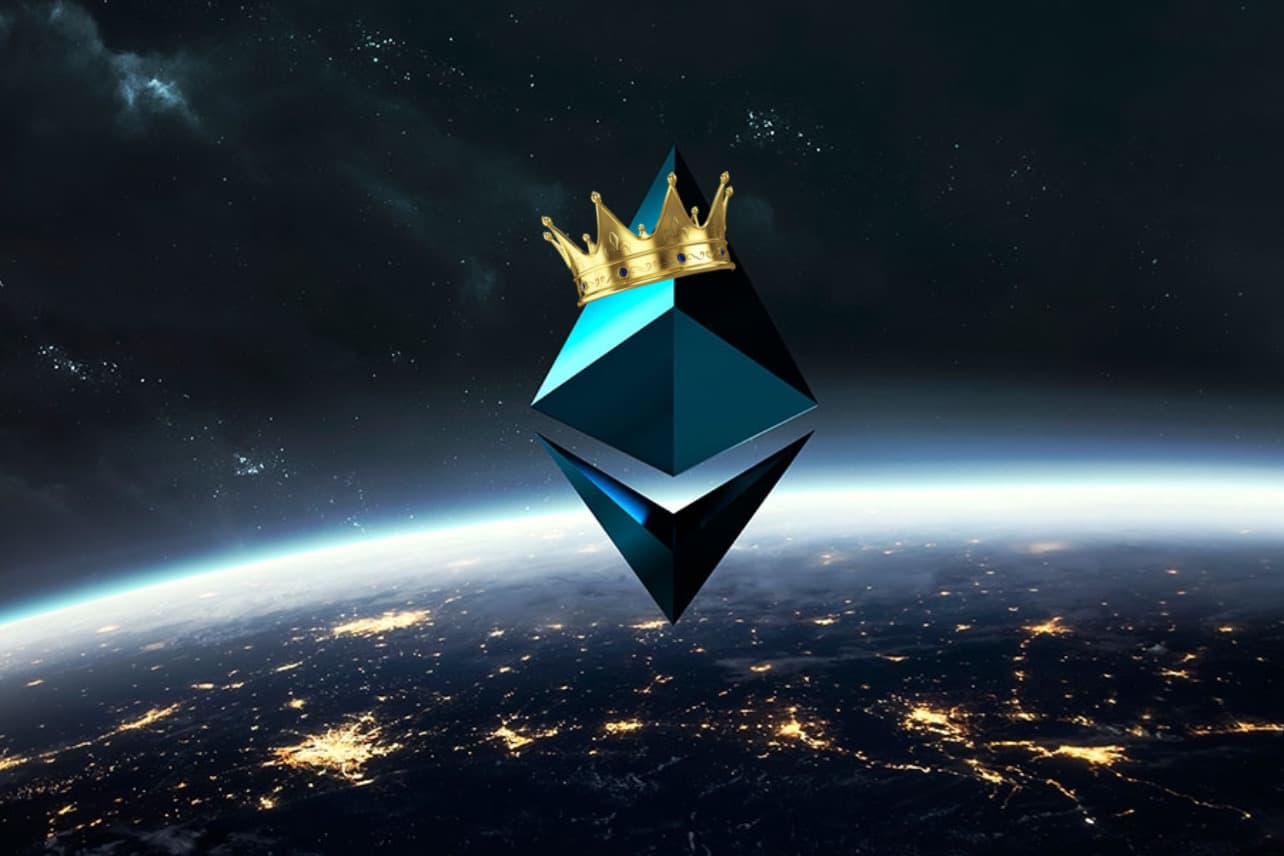
Ethereum's Protocol team has ranked 62 EIPs for the Hegota upgrade, designating FOCIL (EIP-7805) and Frame Transactions (EIP-8141) as must-have priorities, while setting a December 2029 deadline for full Layer 1 quantum resistance.
The Ethereum Foundation’s Protocol team has published a priority ranking of 62 Ethereum Improvement Proposals (EIPs) under consideration for the upcoming Hegota upgrade, offering a clearer picture of which changes could shape the network’s next major hard fork.
The ranking comes as Ethereum developers narrow the scope of Hegota while setting a separate long-term objective: making Ethereum’s Layer 1 resistant to quantum computing across its execution, consensus and data layers by December 2029.
Two proposals sit at the top of the Hegota ranking, receiving the S-tier “must-have” designation. The classification signals that both are considered fundamental to determining the upgrade’s scope and implementation timeline.
On the consensus side, FOCIL (EIP-7805), or Fork-choice enforced Inclusion Lists, ranks as a top priority.
The proposal is designed to strengthen Ethereum’s resistance to censorship by allowing a committee of validators to require the inclusion of valid public transactions. This would make it harder for a dominant block builder to deliberately exclude specific transactions.
On the execution side, Frame Transactions (EIP-8141) also received the “must-have” classification.
The proposal seeks to make account abstraction a native part of Ethereum, with implications for security and the network’s preparation for a post-quantum environment. It would divide transactions into programmable “frames” that can handle validation, gas payment and execution.
The design could give wallets greater flexibility, including support for custom signatures, sponsored gas fees and bundled operations without relying on external intermediaries.
The Protocol team said safely implementing both proposals and testing their interaction represents a core engineering commitment for Hegota.
Hegota’s roadmap also includes a group of A-tier proposals, which are expected to accompany the two core EIPs unless development constraints force them out of the upgrade.
These include VOPS Profiles for FOCIL Eligibility (EIP-8369), which would ship alongside FOCIL, as well as Keyed Nonces for Frame Transactions (EIP-8250) and Recent Roots for Frame Transactions (EIP-8272), which would be developed alongside Frame Transactions.
B-tier proposals will be evaluated individually rather than as a package, while C-tier proposals receive lower priority without being ruled out entirely.
Meanwhile, 28 proposals have been placed in the DFI category, meaning they are considered declined for inclusion.
The ranking gives developers a more selective framework for shaping Hegota rather than treating the upgrade as a vehicle for maximizing the number of EIPs included in a single fork.
Separate from the Hegota ranking, the Protocol team has also outlined a long-term objective for Ethereum’s architecture: making the network’s Layer 1 quantum-resistant across execution, consensus and data by December 2029.
The timeline reflects a deliberate decision to prepare for the possibility that sufficiently advanced quantum computers could emerge around the end of the decade.
The Protocol team noted that the timing of advanced quantum computing is beyond the control of any single organization. Rather than waiting for certainty, Ethereum is therefore working toward a defined deadline and treating 2030 as the earliest plausible arrival of a “quantum day.”
The team stressed that this is an ambitious assumption and that most credible estimates place such a breakthrough further into the future.
For now, however, the December 2029 deadline is expected to remain fixed at least until January 2027, when Ethereum plans to reassess developments in quantum computing with external experts.
The timeline also aligns with independent post-quantum transition targets being pursued by major technology companies including Google, Cloudflare and Microsoft.
Hegota itself is not the fork intended to make Ethereum fully resistant to quantum computing.
Instead, its importance lies partly in determining whether subsequent upgrades can stay on track to meet the 2029 objective.
Under the current roadmap, Ethereum identifies J* as the minimum threshold for post-quantum readiness, using it as a temporary name for a future fork. Full resistance is targeted at L.
Starting from the expected launch of Glamsterdam in Q4 2026, reaching the December 2029 target would require Ethereum to average roughly 7.2 months between forks.
That leaves little room for delays.
Ethereum therefore plans to overlap development cycles. Hegota is expected to launch while the I* specifications mature, while research into subsequent forks from J* through L* progresses in parallel. The objective is to ensure that work on quantum resistance does not fall behind the broader protocol roadmap.
Post-quantum preparation is only one of five research areas identified by Ethereum’s Protocol team as extending across multiple future forks.
The other priorities are:
Faster finality
Privacy
Network state
zkEVM
Together, the five areas illustrate the breadth of Ethereum’s technical roadmap, spanning security, scalability, privacy, execution and the underlying architecture of the network.
The new ranking points to a more selective approach to Ethereum upgrades, with developers placing greater emphasis on a smaller number of foundational changes rather than attempting to pack every promising proposal into a single fork.
FOCIL and Frame Transactions emerging as the two “must-have” proposals highlights two immediate priorities: strengthening censorship resistance and expanding native account capabilities.
At the same time, the 2029 quantum-resistance target introduces a longer-term constraint on Ethereum’s upgrade cadence.
The challenge will not simply be implementing individual proposals. Ethereum will need to balance technical experimentation with network stability while coordinating changes across execution, consensus and data layers.
That makes Hegota an important test of the network’s ability to move forward without allowing an increasingly ambitious roadmap to translate into unnecessary complexity.
Ultimately, Hegota’s success may be measured less by how many EIPs make it onto mainnet and more by whether Ethereum can execute its highest-priority changes safely while maintaining a credible path toward the technical challenges that lie ahead.

Disclaimer of Warranty
The information provided in this article is for general informational purposes only. We make no warranties about the completeness, reliability, and accuracy of this information. Read full disclaimer

Editor's Picks
In the Same Space

South Korea Plans Forex Law Change to Cover Stablecoins

News Desk

Oct 23, 2026

3 min

a16z Drops Crypto Label as Fund Expands Into Frontier Tech
News Desk
Oct 23, 2026
5 min

SoFi Bridges Bank Deposits and Onchain Finance With New Tokenized Dollar
News Desk
Oct 23, 2026
4 min

J.P. Morgan Brings Tokenized Money Market Funds to Solana
News Desk
Oct 23, 2026
3 min