Advertisement
Web3 & Development
Share
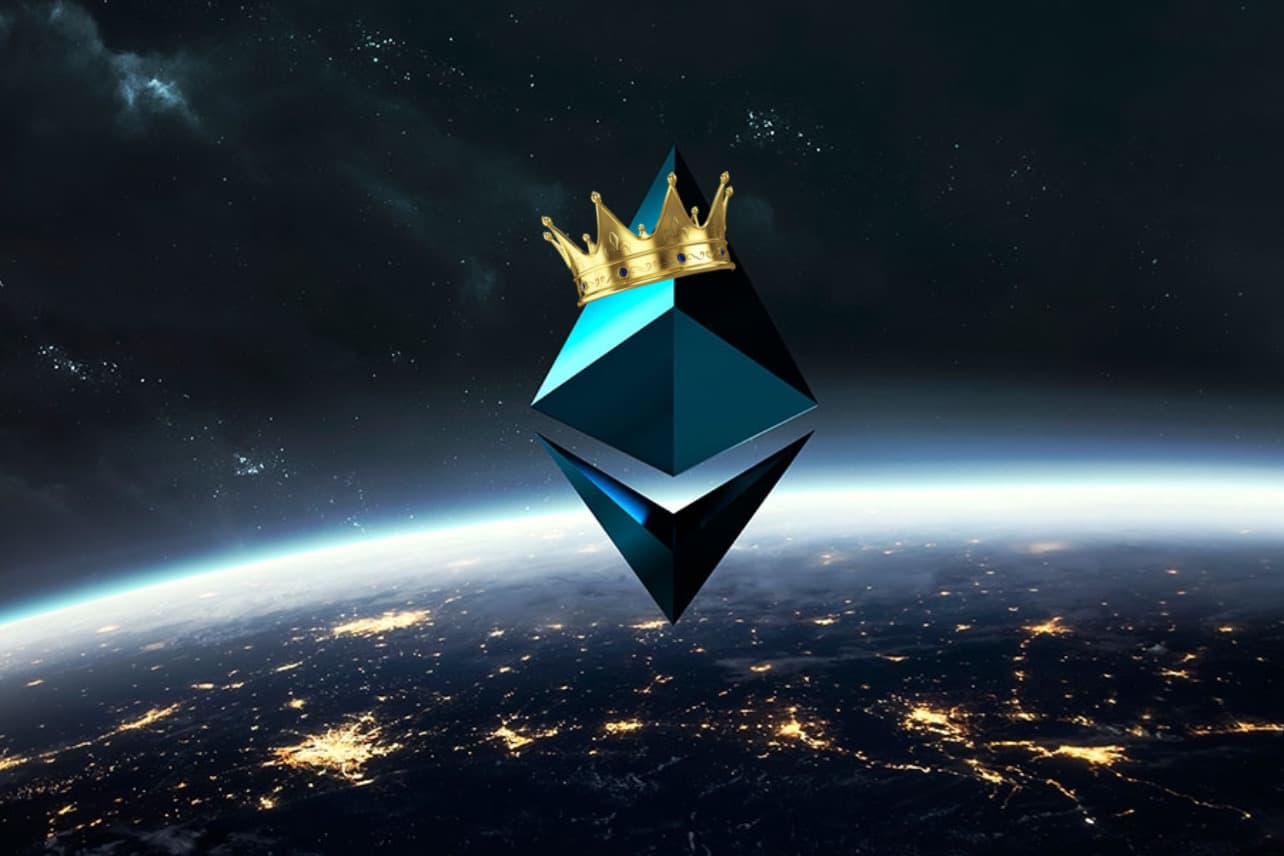
Ethereum enthusiasts had high hopes for the network's transition from Proof-of-Work (PoW) to Proof-of -Stake (PoS) last September, envisioning it as a pivotal moment that would cement ETH's status as "ultrasound money."
This significant shift was expected to reduce ETH issuance by 90%, leading many enthusiasts to anticipate a future where ETH would evolve into a deflationary currency, appreciating steadily over time.
However, a year later, the landscape appears less certain. Over the past month, the global supply of ETH has witnessed a notable surge of nearly 30,000 ETH, equivalent to approximately $47.9 million at the time of writing, as reported by Decrypt.
This sudden increase in circulating ETH can be largely attributed to a corresponding decline in transaction activity on the Ethereum network, marked by fewer NFT trades and diminished DeFi interactions.
Since 2021, Ethereum has been functioning on a fee-burning mechanism, where heightened network congestion results in higher gas prices required to complete on-chain transactions. Elevated gas prices, in turn, contribute to the "burning" of ETH, effectively removing it from circulation.
Recent data indicates a substantial decrease in Ethereum gas fees, with the average network transaction costing just 7 gwei or approximately $0.24. Even an average transaction on popular NFT marketplace OpenSea now comes in at around $0.94.
To put this into perspective, contrast it with slightly over a year ago when users spent over $157 million worth of Ethereum on gas fees alone during the sale of Yuga Labs' Otherside collection, resulting in an average fee of $2,854 per transaction.
While lower gas fees may benefit the typical Ethereum user, they also lead to reduced ETH burning and subsequently contribute to the recent surge in global ETH supply. This inflationary trend has raised concerns among cryptocurrency users and investors who worry about its potential impact on Ethereum's long-term financial stability. However, the Ethereum development team appears largely unperturbed by these developments.
Micah Zoltu, an Ethereum core developer, expressed the prevailing sentiment among his colleagues, stating, "I suspect that none of the core devs care. If you look at the grand scheme of things, it is insignificant."
Danno Ferrin, another Ethereum core developer, echoed this sentiment, stating, "It is still below the all-time high [ETH supply], and [Ethereum's] short-term inflation is well below other chains and the economy as a whole."
It is worth noting that the concerns surrounding inflation extend beyond the cryptocurrency realm, as inflation has been on the rise globally since last year. In fact, in the United States, prices surged in June, marking the sharpest year-over-year increase since 1981. In response to this economic climate, the U.S. Federal Reserve has repeatedly raised interest rates, a move that has consistently impacted the values of cryptocurrencies like Bitcoin and Ethereum.

Disclaimer of Warranty
The information provided in this article is for general informational purposes only. We make no warranties about the completeness, reliability, and accuracy of this information. Read full disclaimer

Editor's Picks

As U.S. Crypto Legislation Stalls, Circle Launches Its Own Financial Network

Walid Abou Zaki

Sep 16, 2026

9 min

Stablecoin Yield Fight Helps Derail CLARITY Act in Senate
Walid Abou Zaki
Sep 15, 2026
8 min

Why Zondacrypto’s Collapse Would Unfold Differently in the UAE
Walid Abou Zaki
Aug 28, 2026
8 min
Read More Articles

In the Same Space

Lunar Ark Secures VARA In-Principle Approval for Virtual Asset Brokerage
News Desk
Sep 17, 2026
2 min
Kraken Parent Payward Plans Onchain Perpetuals on Hyperliquid for U.S. Clients
News Desk
Sep 17, 2026
4 min
Deutsche Bank Moves Into Institutional Crypto Custody With Bitcoin, Ether and Stablecoins
News Desk
Sep 17, 2026
4 min

House Panel Advances Bill to Establish Strategic Bitcoin Reserve
News Desk
Sep 17, 2026
4 min