Advertisement
Regulation & Policy
Share

SN
Senior English Editor


The United States’ top derivatives regulator is preparing to allow trading of crypto-linked perpetual futures within the coming weeks, opening the door to a financial instrument that has until now been largely confined to offshore exchanges.
Speaking at the “Future of Finance” conference hosted by the Milken Institute, Commodity Futures Trading Commission (CFTC) Chairman Michael Selig said the agency is working on establishing a regulatory framework for perpetual futures contracts. These instruments enable traders to maintain leveraged positions tied to cryptocurrency prices indefinitely, without a fixed expiration date.
Selig emphasized that the U.S. needs to reclaim liquidity that has migrated to trading platforms in Asia, Europe, and the Bahamas. He stressed the importance of implementing sufficient investor protections to prevent potential market disruptions from impacting domestic financial stability. According to Selig, the CFTC aims to introduce “true perpetual futures, not long-dated futures”, in the United States within approximately the next month.
Perpetual futures have grown increasingly popular among retail investors, as they allow speculation on price movements without requiring ownership of the underlying asset. Traders can hold positions for as long as they meet margin requirements.
However, these contracts have frequently been associated with heightened volatility in digital asset markets, particularly during periods of sharp price swings and large-scale liquidations.
Although similar products are currently available in the U.S., the CFTC would need to amend certain rules to enable broader access to perpetual futures, especially for retail participants.
Such adjustments are expected to balance financial innovation with stronger risk management and investor protection standards.
Selig is also working closely with SEC Chairman Paul Atkins under a joint initiative known as the “Crypto Project”, aimed at coordinating federal oversight of digital assets. The initiative seeks to clarify asset classifications, define jurisdictional boundaries, eliminate duplicative compliance requirements, and reduce regulatory fragmentation.
Appointed by President Donald Trump, Selig has made the introduction of perpetual futures part of a broader strategy to strengthen risk management tools and improve price discovery within U.S. markets. In a January speech, he noted that despite clear market demand, previous leadership failed to establish appropriate conditions for these markets to operate domestically.
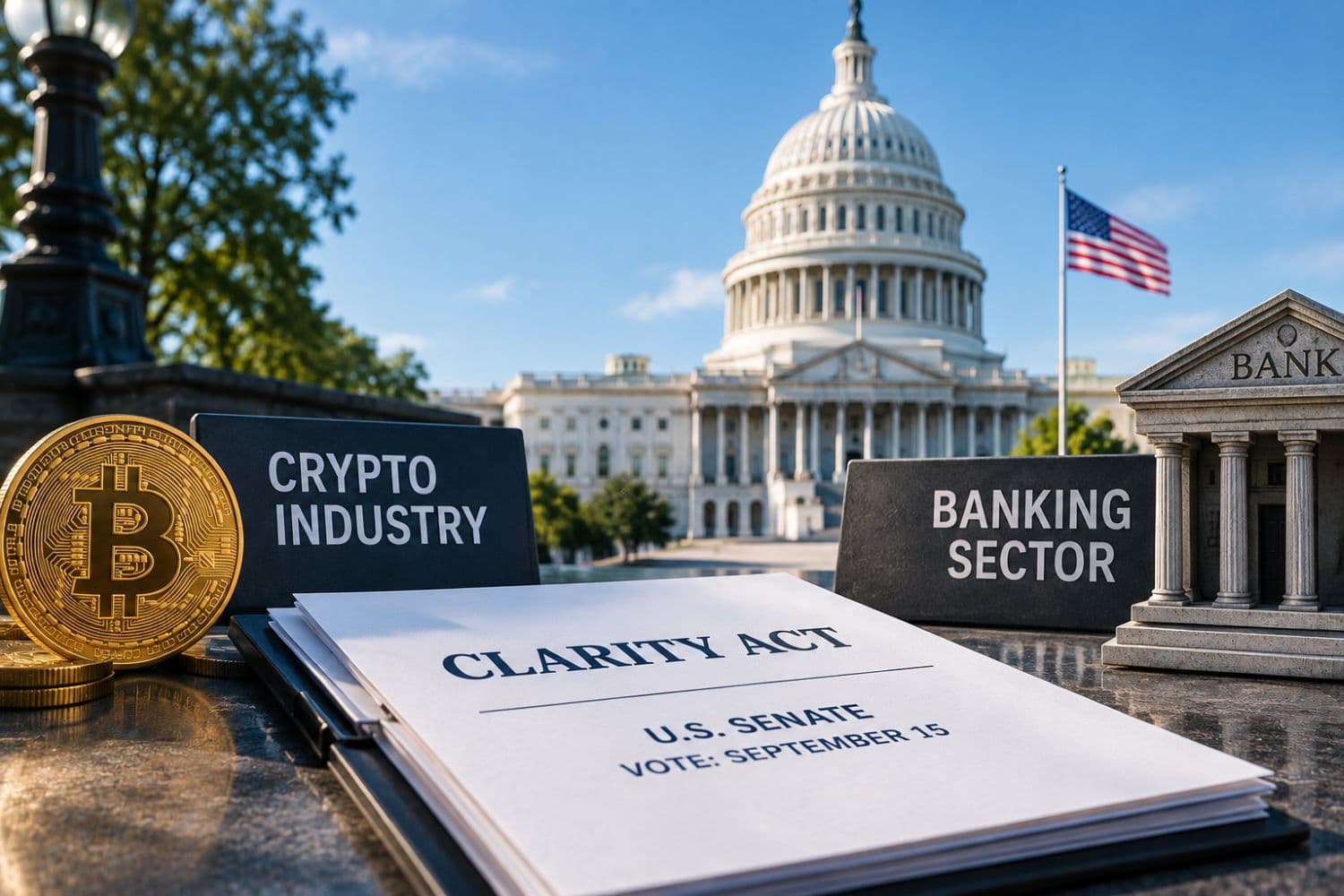
Digital asset legislation has become a priority during Trump’s second administration. In July, the first federal regulatory framework for stablecoin issuers was signed into law. Meanwhile, the U.S. Senate is working on broader crypto market legislation, although progress has stalled amid disagreements between the crypto industry and banking lobby groups over compensation mechanisms tied to stablecoin reserves.

Disclaimer of Warranty
The information provided in this article is for general informational purposes only. We make no warranties about the completeness, reliability, and accuracy of this information. Read full disclaimer

Editor's Picks

Why Zondacrypto’s Collapse Would Unfold Differently in the UAE

Walid Abou Zaki

Aug 28, 2026

8 min

The Missing Orchestration Layer Holding Back Institutional Digital Assets
Julian Sawyer
Aug 18, 2026
5 min

Beyond Crypto Access: How ARP Digital Is Building the UAE’s Digital Capital Infrastructure
Anna K.
Aug 17, 2026
8 min
Read More Articles

In the Same Space

Kalshi's Bid for Non-Stop Stock Perpetuals Reignites CFTC-SEC Turf War
News Desk
Sep 11, 2026
8 min
CFTC Seeks Dismissal of CME Challenge to Kalshi Bitcoin Perpetuals
News Desk
Sep 3, 2026
4 min

Bitcoin Takes Hit as Iran Rising Tensions Send Oil Above $100
News Desk
Sep 14, 2026
6 min

Iran Turns to Crypto as Sanctions Bite, But USDT Has a Control Problem
Salma Naueihed
Sep 9, 2026
5 min