Advertisement
Regulation & Policy
Share
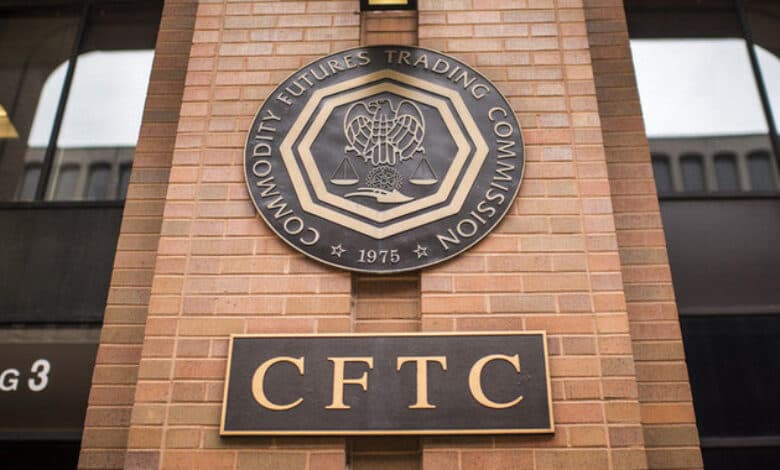
The U.S. Commodity Futures Trading Commission (CFTC) has launched a new Innovation Task Force aimed at developing clearer regulatory guardrails for emerging technologies in the U.S. derivatives market, including crypto assets, blockchain infrastructure, artificial intelligence, and prediction markets.
Announced by CFTC Chairman Michael S. Selig, the new task force is designed to advance what the agency described as a “clear rules of the road” approach for American innovators building novel financial products and technologies. The initiative comes as the CFTC deepens its role in overseeing event contracts and prediction markets while continuing to define its position on crypto-related derivatives and blockchain-based financial infrastructure.
The Innovation Task Force will work alongside the agency’s Innovation Advisory Committee and support the Commission in developing a more structured regulatory framework for three priority areas: crypto assets and blockchain technologies, artificial intelligence and autonomous systems, and prediction markets and event contracts.
Chairman Selig said the goal is to foster responsible innovation domestically while ensuring U.S. market participants remain competitive as new financial technologies evolve. The task force will also coordinate with other federal agencies and departments, including the U.S. Securities and Exchange Commission and the SEC’s Crypto Task Force, on cross-agency innovation initiatives.
Michael J. Passalacqua, senior advisor to the Chairman, will lead the new unit. In a public post on X, Passalacqua said the task force would focus on advancing the CFTC’s innovation agenda across crypto, AI, and prediction markets under Selig’s leadership.
The move is notable because it signals that the CFTC is no longer approaching these sectors solely through enforcement or piecemeal guidance, but is instead building a dedicated internal structure to shape forward-looking policy. For the digital asset industry, that could translate into more formal engagement around crypto derivatives, blockchain-based market infrastructure, and tokenized financial products that intersect with commodities and futures regulation.
While the task force’s remit is broad, prediction markets appear to be a central focus of the CFTC’s current innovation push. The agency has been particularly active in March as event contracts tied to politics, sports, entertainment, and other real-world outcomes face growing regulatory and political scrutiny.
Earlier this month, the CFTC issued a letter to registered exchanges outlining compliance expectations and product requirements for event contracts, the instruments used by prediction market platforms such as Kalshi and Polymarket. The regulator is also seeking public comment on whether it should amend existing rules or introduce new ones governing prediction market oversight.
These moves come as lawmakers and regulators increasingly question the boundaries of event contracts, especially where markets touch politically sensitive or ethically controversial subjects such as war, terrorism, or election-related outcomes. The CFTC’s challenge is to balance financial innovation and market demand with concerns around market integrity, insider trading, and whether certain contracts resemble regulated derivatives or impermissible forms of gambling.
The agency’s regulatory push is unfolding alongside growing pressure on major prediction market operators. Both Kalshi and Polymarket recently announced steps to strengthen market integrity and address insider trading concerns on their platforms. Kalshi introduced preemptive screening aimed at restricting politicians and sports insiders from trading on related markets, while Polymarket updated and clarified its own rules around insider trading as part of broader integrity enhancements.
Chairman Selig has also taken a firm stance on the CFTC’s jurisdiction over prediction markets, making clear that the agency views itself as the primary federal authority in this space. In recent remarks, he warned that those challenging the Commission’s authority—including U.S. states—could face litigation, saying the agency would “see you in court.”
That warning comes as state-level resistance escalates. In Arizona, state authorities have filed charges against Kalshi, alleging the company is operating an illegal gambling business. In Nevada, regulators recently secured a temporary order blocking Kalshi from offering sports, political, and entertainment event contracts in the state for at least 14 days. These state actions underscore a growing jurisdictional conflict between federal derivatives oversight and state gambling enforcement, one that could become a defining legal battleground for the U.S. prediction market industry.
The Innovation Task Force launch is part of a wider burst of CFTC activity that extends beyond prediction markets. Earlier this month, the regulator signed a memorandum of understanding with Major League Baseball to cooperate on limiting event contracts that may pose what it called “integrity risk.” The agreement highlights how the agency is beginning to work directly with major sports organizations as event-based markets expand.
The CFTC also made a notable decision last week involving self-custodial wallet provider Phantom, allowing the company to provide users with access to derivatives markets without registering as a broker. That move was widely seen as an important signal for crypto infrastructure providers, suggesting the regulator may be open to more nuanced treatment of wallet-based access models where traditional intermediary definitions do not neatly apply.
Taken together, the CFTC’s recent actions suggest the agency is attempting to shape a more coherent regulatory perimeter for a rapidly evolving part of financial markets. Rather than treating crypto, AI, and prediction markets as isolated categories, the Innovation Task Force suggests the CFTC increasingly sees them as overlapping components of a broader transformation in market structure.
For blockchain and digital asset firms operating in U.S. derivatives-adjacent markets, the creation of the task force may mark an early signal that future CFTC policy will be more proactive, more coordinated, and potentially more formalized than the fragmented guidance that has defined much of the sector to date.

Disclaimer of Warranty
The information provided in this article is for general informational purposes only. We make no warranties about the completeness, reliability, and accuracy of this information. Read full disclaimer

Editor's Picks
In the Same Space

Stablecoin Yield Fight Helps Derail CLARITY Act in Senate

Walid Abou Zaki

Sep 15, 2026

8 min

Lunar Ark Secures VARA In-Principle Approval for Virtual Asset Brokerage
News Desk
Sep 17, 2026
2 min

Bitcoin ETFs Lose $288.7M in Fresh Wave of Investor Selling
News Desk
Sep 16, 2026
2 min
CFTC Chair Calls for ‘Mass Tokenization’ of Financial Markets
News Desk
Sep 23, 2026
4 min