
Advertisement
Institutional Adoption
Share
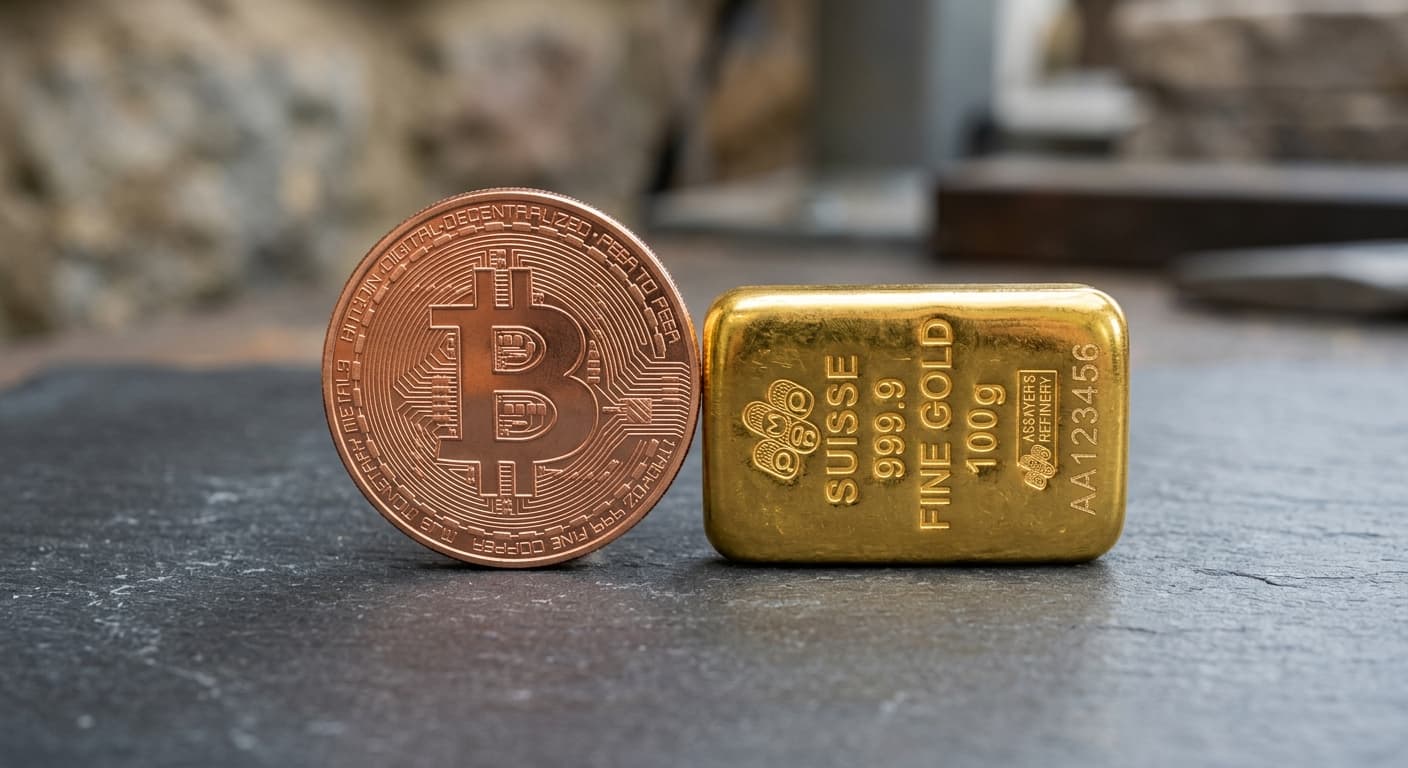
Bitcoin has reached record-breaking levels against gold this week, signaling growing institutional interest and solidifying its role as a modern store of value.
The Bitcoin-to-gold ratio, which measures how many ounces of gold one Bitcoin can purchase, climbed to an all-time high of 37.3 on Monday. This figure surpasses the previous peak of 36.7 reached during the crypto bull run in November 2021.
“This new high highlights Bitcoin's continued adoption and maturation as an asset class,” said Sidney Powell, CEO and co-founder of institutional capital marketplace Maple Finance. Powell attributes this surge to the growing inflows into U.S. Bitcoin exchange-traded funds (ETFs) and Bitcoin’s increasing role in diversified investment portfolios.
The ratio is calculated by dividing Bitcoin’s current price by the spot price of gold per ounce. It serves as a key indicator of the relative strength and investor preference between the two assets.
Singapore-based QCP Capital noted in a market update that this milestone “reinforces Bitcoin’s position as an increasingly favored store of value over traditional gold,” a sentiment echoed by its rapid institutional adoption.
Despite this, Bitcoin’s volatility and its growing correlation with traditional markets mean gold remains a safer choice for investors during times of uncertainty. In fact, gold-backed ETFs currently hold $290 billion in assets under management (AUM), more than double Bitcoin ETFs’ $119 billion, as reported by the World Gold Council and Coinglass.
Bitcoin’s scarcity—programmatically capped at 21 million tokens—is a key factor in its rising valuation. Its halving events, which reduce new Bitcoin issuance by 50% approximately every four years, create further supply constraints. In contrast, gold continues to see ongoing mining production.
Both assets share limited supply characteristics, earning comparisons as stores of value. However, while gold boasts a 3,500-year history and lower volatility (around 20% annually), Bitcoin offers far higher return potential despite its steeper price swings, with volatility hovering near 50% annually.
It is worth noting that Bitcoin’s climb comes amid a surge in ETF inflows and mounting institutional acceptance.
Analysts expect this trend to continue, driven by increasing recognition of Bitcoin’s role in balanced portfolios.

Disclaimer of Warranty
The information provided in this article is for general informational purposes only. We make no warranties about the completeness, reliability, and accuracy of this information. Read full disclaimer

Editor's Picks

Why Zondacrypto’s Collapse Would Unfold Differently in the UAE

Walid Abou Zaki

Aug 28, 2026

8 min

The Missing Orchestration Layer Holding Back Institutional Digital Assets
Julian Sawyer
Aug 18, 2026
5 min

Beyond Crypto Access: How ARP Digital Is Building the UAE’s Digital Capital Infrastructure
Anna K.
Aug 17, 2026
8 min
Read More Articles

In the Same Space

JPMorgan to Accept Bitcoin as Collateral: The Line Between Banking and Crypto Just Disappeared
News Desk
Aug 17, 2026
8 min

Treasury Buybacks Put Bond Yields Back in Focus for Crypto
News Desk
Aug 20, 2026
4 min

Citi to Launch Bitcoin Custody as It Builds 24/7 Digital Asset Infrastructure
News Desk
Aug 19, 2026
5 min
Bitcoin-Gold Correlation Rises Above 50% as Debt Fears Mount
News Desk
Aug 28, 2026
5 min