
Advertisement
Regulation & Policy
Share
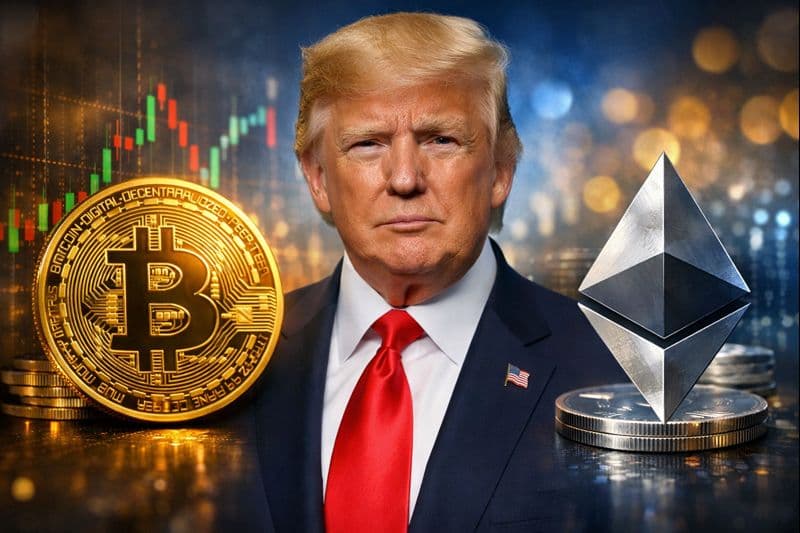
Bitcoin plunged to a local bottom of $91,530 on February 3 before rebounding to $95,306, highlighting the asset’s growing sensitivity to macroeconomic events.
The sharp drop followed President Trump’s executive order imposing tariffs on imports from China, Canada, and Mexico, reigniting fears of a global trade war. Markets reacted swiftly, with investors scrambling to reassess risk exposure.
The broader crypto market also mirrored Bitcoin’s turbulence. Ether crashed 36% to $2,100, while Solana tumbled 24% to $176. Memecoins suffered the most, with the GMCI Meme Index down 40%. Trump’s own memecoin, which previously surged amid his presidential campaign momentum, has now tanked 77% from its peak.
Despite short-term price corrections, analysts remain optimistic about Bitcoin’s long-term trajectory. Bernstein analysts noted that Bitcoin's retracement aligns with historical trends, reinforcing their $200,000 price target by 2025. They pointed to robust institutional demand, with Bitcoin ETFs seeing $5.3 billion in inflows in January alone. MicroStrategy also continued its aggressive Bitcoin accumulation, further signaling institutional confidence.
Bitwise’s Jeff Park believes that Trump's tariffs could be a strategic maneuver to weaken the U.S. dollar and create conditions for lower interest rates. This, he argues, could ultimately drive Bitcoin prices "violently higher." The Federal Reserve’s interest rate policy remains a key factor, with some analysts speculating that rate cuts could further fuel Bitcoin’s next leg up.
While some analysts worry that escalating tariffs could trigger a broader economic slowdown, others view them as part of a strategic shift in global trade policy. The move could pressure the Federal Reserve to adopt a more dovish stance, potentially increasing liquidity in financial markets—an environment historically favorable to Bitcoin.
Despite the recent price dip, many believe Bitcoin remains in a long-term bullish cycle. Bernstein analysts argue that as governments and institutions increasingly adopt Bitcoin as a hedge against monetary debasement, its role in the global financial system will only strengthen. With key macroeconomic events unfolding, Bitcoin’s trajectory in 2024 will be shaped not only by crypto-native factors but also by broader economic and geopolitical shifts.

Disclaimer of Warranty
The information provided in this article is for general informational purposes only. We make no warranties about the completeness, reliability, and accuracy of this information. Read full disclaimer

Editor's Picks

Exclusive: Flipster GM Benjamin Grolimund Discusses Full VARA License and UAE Growth

Anna K.

Aug 4, 2026

4 min

Digital Euro: Europe’s Sovereignty Project Has a Demand Problem
Walid Abou Zaki
Jul 10, 2026
9 min

In Digital Finance, the Product Is the Regulation
Walid Abou Zaki
Jul 9, 2026
7 min
Read More Articles

In the Same Space

SEC Freezes Nasdaq Bitcoin Index Options Approval After CME Challenge
News Desk
Aug 3, 2026
4 min

Kalshi Faces New York Lawsuit Seeking Up to $36B in Damages
News Desk
Jul 31, 2026
5 min
Schumer Targets Trump’s $1.4B Crypto-Related Income With New Bill
News Desk
Jul 31, 2026
5 min
Fed Holds Rates Steady as Hawkish Split Clouds Crypto’s Liquidity Outlook
Salma Naueihed
Jul 30, 2026
4 min