Advertisement
Regulation & Policy
Share
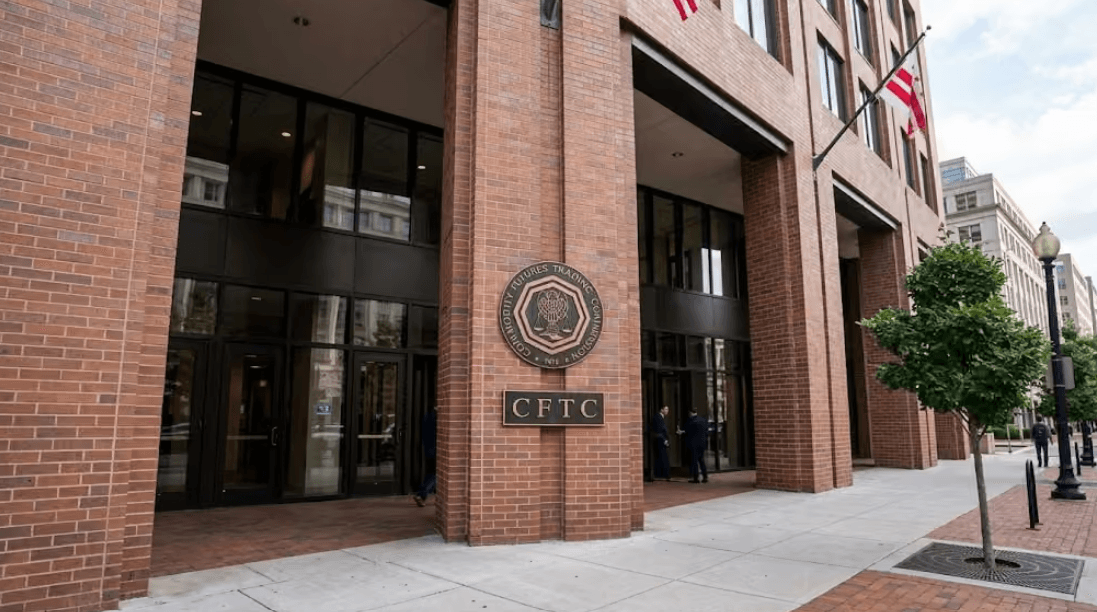
The Commodity Futures Trading Commission (CFTC) on Thursday appointed dozens of top cryptocurrency executives to its Innovation Advisory Committee (IAC), bringing a significant portion of the digital asset sector into its advisory framework. The move comes as Congress continues to wrestle with unresolved issues surrounding crypto regulation in the United States.
The newly appointed members include senior leaders from major firms such as Coinbase, Uniswap Labs, Ripple, Kraken, Robinhood, CME Group, and Nasdaq. The scale of participation marks an unusually strong industry presence within a regulatory body that currently oversees crypto derivatives markets but does not regulate spot trading.
Formed last month, the committee is designed to provide the CFTC with expert insight and strategic recommendations on financial market innovation. In a statement, CFTC Chairman Michael S. Selig said the advisory panel would help the agency “future-proof” its markets and craft clearer regulatory frameworks as emerging technologies, including blockchain and artificial intelligence, continue to transform global finance.
Selig emphasized that by convening stakeholders from across the marketplace, the IAC would serve as a valuable resource as the Commission works to modernize its regulatory structure to accommodate both current and future innovations.
The announcement coincides with continued debate in Congress over the proposed CLARITY Act, legislation intended to establish clearer regulatory boundaries for digital assets in the United States. The bill seeks to determine when digital assets fall under securities regulation and when they qualify as commodities.
At its core, the proposal aims to define the division of oversight between the CFTC, which would supervise digital commodities, and the Securities and Exchange Commission (SEC), which would retain authority over securities-like tokens.
While bipartisan agreement has largely formed around the broader division of jurisdiction, lawmakers and industry stakeholders remain split over how the legislation addresses stablecoins. A central question is whether crypto companies should be allowed to offer yield on dollar-pegged tokens.
This issue has drawn sustained lobbying efforts from the banking sector and has become one of the most controversial elements of the bill.
Amid these ongoing disagreements, the CFTC welcomed Coinbase CEO Brian Armstrong to the advisory committee. However, just weeks earlier, Armstrong withdrew his support for the CLARITY Act, citing concerns that banking industry lobbying had influenced restrictions on stablecoin rewards.
His reversal added complexity to the bill’s trajectory in the Senate. Armstrong argued that the draft legislation contained “too many issues”, including provisions that could limit tokenized products, constrain decentralized finance (DeFi), and reduce stablecoin rewards, rather than focusing strictly on market structure jurisdiction.
He further warned that the proposal could weaken the CFTC’s authority and risk “stifling innovation” by effectively placing the agency under the SEC’s influence.

Disclaimer of Warranty
The information provided in this article is for general informational purposes only. We make no warranties about the completeness, reliability, and accuracy of this information. Read full disclaimer

Editor's Picks
In the Same Space

Bitcoin ETFs Lose $288.7M in Fresh Wave of Investor Selling

News Desk

Sep 16, 2026

2 min

Stablecoin Yield Fight Helps Derail CLARITY Act in Senate
Walid Abou Zaki
Sep 15, 2026
8 min

Kraken Parent Payward Plans Onchain Perpetuals on Hyperliquid for U.S. Clients
News Desk
Sep 17, 2026
4 min

Lunar Ark Secures VARA In-Principle Approval for Virtual Asset Brokerage
News Desk
Sep 17, 2026
2 min