Advertisement
Opinion
Share
AK
Senior English Editor


For nearly two decades, social media has sold us the same illusion: free access in exchange for connection.
Platforms like Facebook, X, Instagram, and Telegram became the digital squares of our time, but only because users agreed, often unknowingly, to pay with their data, their attention, and increasingly, their privacy.
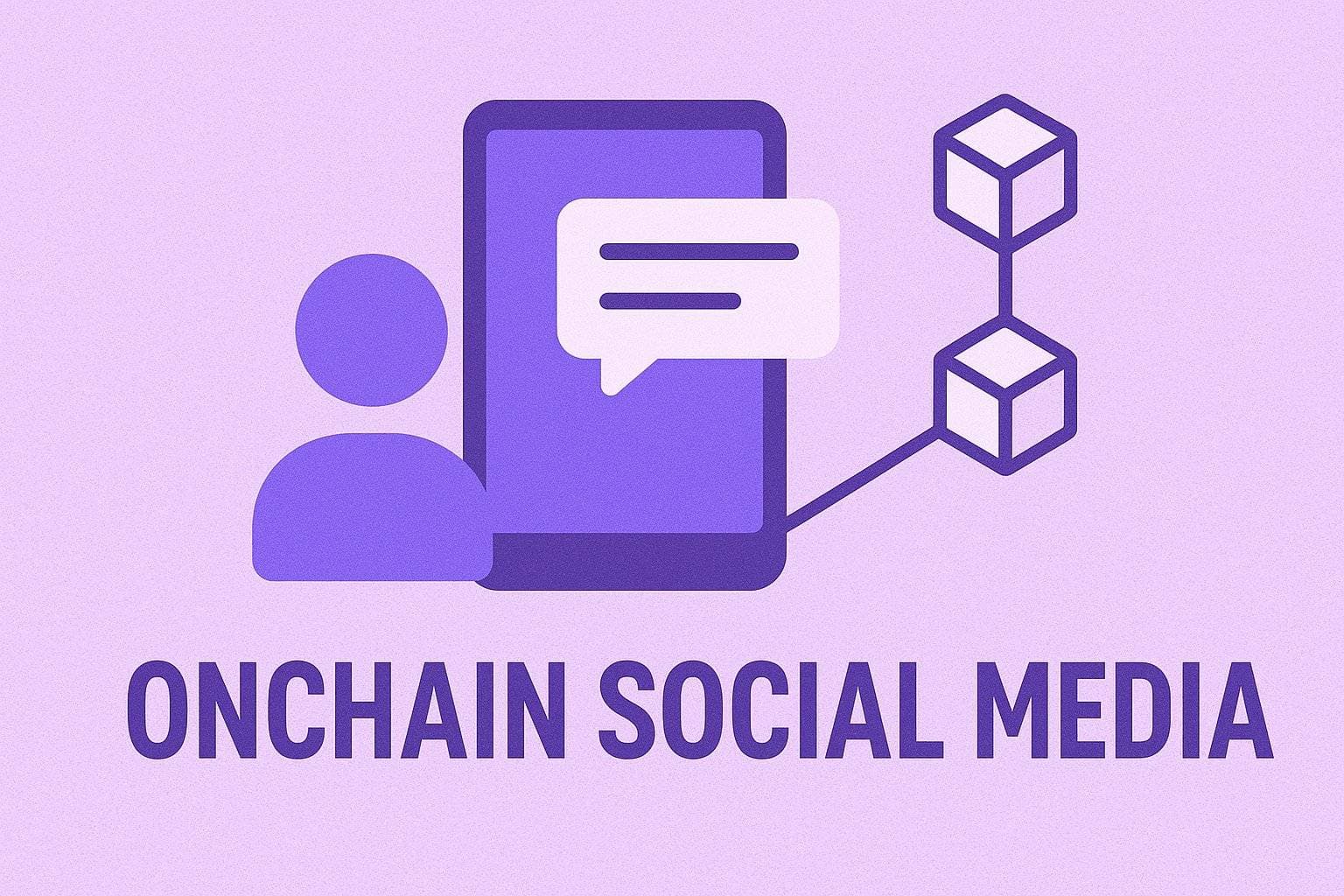
But a tectonic shift is underway, the future of social networks will not be free. Instead, they’ll be onchain; decentralized, governed by their communities, and powered by cryptographic incentives rather than surveillance capitalism.
Earlier this year, Telegram (long considered the “safer” alternative to WhatsApp) confirmed that it had shared user data with French authorities. For a platform that had built its reputation on encryption and privacy, the move was a stark reminder: if a service is centralized, it can always be compromised.
This revelation fueled debates about decentralized messengers and pushed forward projects like XMTP, Status, and Lens Protocol, which aim to build censorship-resistant, blockchain-native communication tools.
In Web2, a handful of executives make decisions about algorithms, moderation, and monetization. Web3 flips this logic.
Case in point: Farcaster, a decentralized social network built on Ethereum scaling tech, lets developers build apps on top of its open protocol. No single entity dictates what you can or cannot post.
Why is this shift inevitable? Because economic incentives are embedded into the very structure of blockchains.
Think of it as replacing “surveillance capitalism” with incentive capitalism.
One of the most radical promises of onchain networks is data portability. Your posts, followers, and reputation can exist as NFTs or onchain identities, which you own and can carry between platforms.
This is a sharp break from Web2’s walled gardens, where leaving Twitter/X means leaving your audience. In the onchain model, your community follows you because you own your digital identity.
When we say the next generation of social networks won’t be free, it doesn’t mean users will suddenly face hefty subscription costs. Rather, it means that the flow of value will be fundamentally restructured. Instead of a system where corporations extract profits from user data and advertising, blockchain-based networks are creating models where value moves transparently, fairly, and directly between participants.
The result is a model that is not “free” in the exploitative sense, but fairer for all parties involved: users, creators, and developers alike.
In short: not free, but fair.
Brazil, Indonesia, and even Kazakhstan are exploring digital asset reserves and onchain economies at the national level. On the cultural front, decentralized social apps like Farcaster, Lens, and Minds are gaining traction, and Web3-native creators are experimenting with NFT-based fan clubs and DAO-driven communities.
The pieces are falling into place for a world where the networks that connect us are no longer free-to-use but free in a deeper sense, free from surveillance, censorship, and unilateral corporate control.
The old bargain — “if it’s free, you’re the product” — is collapsing. What comes next is not just a new business model but a new philosophy: one where social networks are not given away, but built, owned, and sustained by the people who use them.
The next social networks won’t be free. They’ll be onchain.

Disclaimer of Warranty
The information provided in this article is for general informational purposes only. We make no warranties about the completeness, reliability, and accuracy of this information. Read full disclaimer

Editor's Picks
Why Zondacrypto’s Collapse Would Unfold Differently in the UAE

Walid Abou Zaki

Aug 28, 2026

8 min

The Missing Orchestration Layer Holding Back Institutional Digital Assets
Julian Sawyer
Aug 18, 2026
5 min
Beyond Crypto Access: How ARP Digital Is Building the UAE’s Digital Capital Infrastructure
Anna K.
Aug 17, 2026
8 min
Read More Articles

In the Same Space

ESMA Targets Prediction Markets: Polymarket and Kalshi Face EU Scrutiny Over Authorization
News Desk
Sep 11, 2026
4 min

Glamsterdam Upgrade Set for Oct. 6 Debut on Ethereum's Sepolia Testnet
News Desk
Sep 11, 2026
6 min

Kalshi's Bid for Non-Stop Stock Perpetuals Reignites CFTC-SEC Turf War
News Desk
Sep 11, 2026
8 min

SEC Seeks to Allow Blockchain as Official Ledger for Tokenized Securities
News Desk
Sep 11, 2026
7 min