Advertisement
Exchanges & Trading
Share
Major cryptocurrencies declined on Monday as renewed tariff concerns triggered a broad risk-off move across global markets, weighing on digital assets while pushing investors toward traditional safe havens.
Bitcoin fell roughly 3.5% on the day, slipping below the $92,000 level, while Ether dropped close to 5% to trade under $3,200. Losses were sharper among higher-beta tokens, with Solana down more than 8% as risk appetite deteriorated.
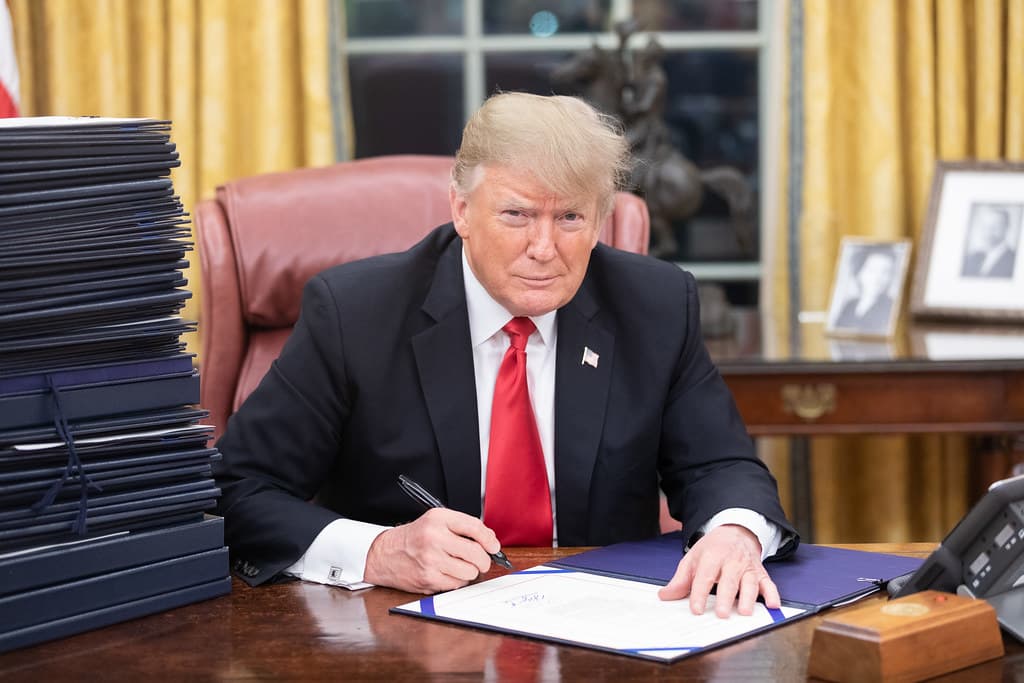
The sell-off was catalyzed by U.S. President Donald Trump’s announcement over the weekend that a 10% tariff would be imposed on goods from eight European countries starting February 1, rising to 25% in June unless an agreement is reached for a “purchase of Greenland.” The news sent U.S. equity-index futures lower at the start of Monday’s trading and contributed to a broad defensive rotation across risk assets.
Crypto markets, increasingly tracking macro sentiment, moved in line with equities as investors reduced exposure to growth-oriented and speculative positions. Total crypto market capitalization fell by approximately 2.6% to around $3.12 trillion during the session.
Market positioning amplified the decline. More than $600 million in leveraged bullish positions were liquidated over a 24-hour period, according to derivatives data, with long liquidations accounting for the majority of the wipeout.
Bitcoin’s dominance edged higher to about 59%, reflecting relative resilience compared with altcoins, while Ethereum’s share of total market capitalization hovered near 12.4%.
While crypto assets retreated, traditional safe havens saw strong inflows. Gold prices surged to fresh record highs, trading between $4,660 and $4,690 per ounce, as investors sought protection from heightened geopolitical and trade-related uncertainty.
Silver also advanced sharply, briefly moving above the $92 per ounce level, reinforcing the defensive shift in market positioning.
The latest price action underscores the growing influence of macroeconomic forces on digital asset markets. Trade policy uncertainty, geopolitical risk, and global liquidity conditions are increasingly shaping short-term crypto performance.
While longer-term adoption trends remain intact, near-term market behavior continues to reflect broader risk sentiment, highlighting crypto’s integration into global financial markets.

Disclaimer of Warranty
The information provided in this article is for general informational purposes only. We make no warranties about the completeness, reliability, and accuracy of this information. Read full disclaimer

Editor's Picks

Why Zondacrypto’s Collapse Would Unfold Differently in the UAE

Walid Abou Zaki

Aug 28, 2026

8 min

The Missing Orchestration Layer Holding Back Institutional Digital Assets
Julian Sawyer
Aug 18, 2026
5 min

Beyond Crypto Access: How ARP Digital Is Building the UAE’s Digital Capital Infrastructure
Anna K.
Aug 17, 2026
8 min
Read More Articles

In the Same Space

Corporate Crypto Treasury Boom: Strive Enters Top Five Bitcoin Holders as Bitmine Nears 5% of ETH Supply
News Desk
Sep 1, 2026
4 min

$320M Exploit Drains Bitcoin From Network Used by Exchanges
News Desk
Sep 7, 2026
4 min

ARK Invest, Glassnode Map Decentralization Tradeoffs Across Bitcoin, Ethereum and Solana
News Desk
Sep 3, 2026
5 min

Crypto-Backed Lending Spreads to Russia as Sberbank Joins Global Bank Push
News Desk
Aug 31, 2026
6 min