Advertisement
Tokenization & RWA
Share
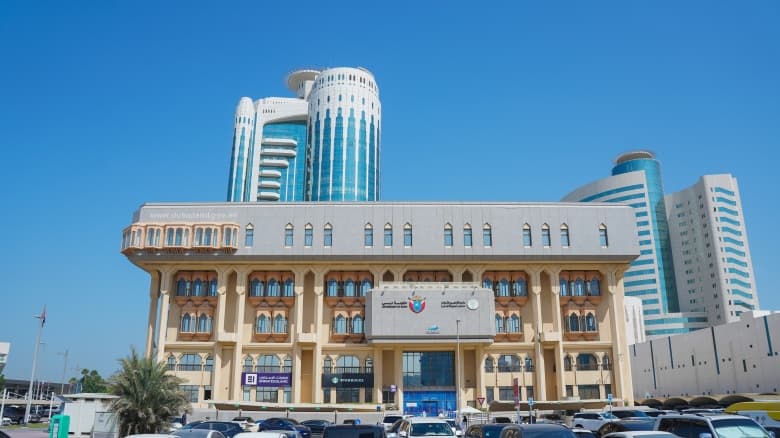
Dubai real estate tokenization has entered a new operational stage, as Dubai Land Department (DLD) announced that secondary market trading will begin on February 20, 2026 under Phase Two of its tokenization initiative.
The activation enables resale of approximately 7.8 million tokenized property units, marking the first structured introduction of secondary liquidity within Dubai’s regulated real estate tokenization framework.
Phase One of the initiative focused on establishing the legal, regulatory, and technical infrastructure required to tokenize property title deeds. As previously reported by Unlock Blockchain during the initial rollout, the tokens represent fractional ownership directly linked to registered title deeds under DLD, distinguishing Dubai’s approach from indirect SPV-based structures seen in other jurisdictions.
That structural clarity laid the foundation for Phase Two.
If the initial phase demonstrated feasibility, the new phase introduces live market dynamics.
This progression reflects a deliberate move by DLD to transition the initiative from experimental validation to operational market testing — placing liquidity formation at the center of the next phase.
According to information shared with Unlock Blockchain, secondary trading activity will be facilitated through the Prypco platform as part of the project’s current distribution framework.
Prypco holds a broker-dealer license issued by Virtual Assets Regulatory Authority (VARA), positioning the secondary activity within Dubai’s virtual asset regulatory perimeter.
Under the current structure:
Prypco supports the secondary trading interface
Ctrl Alt manages token issuance and lifecycle processes in the backend
Dubai Land Department ensures synchronization between token transfers and official title deed records
The model remains coordinated and centralized at this stage, reflecting a phased rollout approach designed to monitor liquidity formation, pricing behavior, and operational integrity before broader expansion.
Robert Farquhar, CEO, MENA at Ctrl Alt, stated: “Phase Two introduces secondary market functionality — one of the core advantages of tokenization: liquidity. As the infrastructure partner, we manage token issuance and lifecycle processes in the backend, while integrating with Dubai Land Department to ensure ownership records remain accurate and synchronized. This marks the transition from primary issuance to a regulated secondary trading environment.”
The statement highlights the integrated architecture underpinning Phase Two, linking marketplace activity with regulated token issuance and official property records.
Commenting on the announcement, Essa Ibrahim, Co-Founder and President of Prypco, said: “The introduction of a regulated secondary market marks an important step in bringing greater liquidity and flexibility to a traditionally long-term asset class. It sets a new benchmark for investor confidence and market efficiency, supported by the regulatory framework established by the Virtual Assets Regulatory Authority (VARA). We are pleased to partner with the Dubai Land Department (DLD) through PRYPCO Mint on this development.”
The statement underscores the role of the secondary layer in enhancing liquidity within a regulated framework, linking market efficiency to supervisory oversight and investor confidence.
The introduction of resale functionality shifts the focus from token creation to market sustainability.
Key elements that will shape Phase Two include:
How pricing mechanisms function in practice
The transparency of trading activity
The depth of investor participation
The pace and stability of liquidity formation
Liquidity — not issuance — ultimately determines whether real estate tokenization evolves into durable financial infrastructure.
The February 20 rollout will serve as the first practical indicator of how Dubai’s model performs under live trading conditions.
DLD positioned the initiative within the broader context of Dubai Real Estate Strategy 2033, UAE Vision 2071, and Dubai Urban Plan 2040 — reinforcing tokenization as part of a long-term modernization agenda.
Dubai’s regulatory evolution has consistently followed a measured, data-driven trajectory. Phase Two reflects that approach: structured activation, monitored performance, and incremental scaling.
If liquidity stabilizes within this framework, Dubai real estate tokenization could transition from controlled innovation into replicable infrastructure.
Unlock Blockchain will continue monitoring developments as secondary trading begins and further operational details emerge.
Note: this article has been updated at 17:00 UAE time, Prypco feedback was added

Disclaimer of Warranty
The information provided in this article is for general informational purposes only. We make no warranties about the completeness, reliability, and accuracy of this information. Read full disclaimer

Editor's Picks

When Assets Move—or Stop—Without Consent: The Limits of Crypto Wallet Control

Walid Abou Zaki

Sep 29, 2026

6 min

Where Do the Dollars Behind the UAE’s Crypto Economy Sit?
Anna K.
Sep 21, 2026
9 min

As U.S. Crypto Legislation Stalls, Circle Launches Its Own Financial Network
Walid Abou Zaki
Sep 16, 2026
9 min
Read More Articles

In the Same Space

CoinMENA Becomes First Digital Asset Platform Live in Jordan’s Regulatory Sandbox
Anna K.
Sep 21, 2026
3 min

Rakbank Islamic Explains Shari’ah Framework Behind Bitcoin Service
Salma Naueihed
Sep 30, 2026
4 min

The Gulf to Tokenize $500 Billion in Assets by 2030. Who Gets Them On-Chain?
Anna K.
Sep 30, 2026
6 min

EEMEA SMEs Turn to Crypto and Stablecoins as Digital Adoption Accelerates
News Desk
Sep 28, 2026
5 min