Advertisement
Stablecoins & Payments
Share
Switzerland’s Financial Market Supervisory Authority (FINMA) has published guidance about the application of regulatory requirements for payments on the blockchain for financial services providers under FINMA supervision. The guidance on virtual asset service providers (VASPs) concerns blockchain service providers such as exchanges, wallet providers and trading platforms. It requires that the existing rules on combating money laundering also apply to such service providers.
FINMA notes that blockchain-based business models cannot be allowed to circumvent the existing regulatory framework. This applies particularly to the rules for combating money laundering and terrorist financing, where the inherent anonymity of the blockchain presents increased risks. For this reason, Switzerland has always applied the Anti-Money Laundering Act to blockchain service providers. Such providers are obliged, for instance, to verify the identity of their customers, to establish the identity of the beneficial owner, to take a risk-based approach to monitoring business relationships and to file a report with the Money Laundering Reporting Office Switzerland (MROS) if there are reasonable grounds to suspect money laundering.
The guidance adds, Article 10 AMLO-FINMA requires that information about the client and the beneficiary be transmitted with payment orders. The financial intermediary receiving this information then has the opportunity to check the name of the sender against sanction lists. It can also check whether the information for the beneficiary is correct or whether it should return the payment in the event of discrepancies.
The provision must be interpreted in a technology-neutral way, FINMA says, and therefore also applies to services based on blockchain technology. It is not necessary for the information to be transmitted on the blockchain. Transmission can take place via other communication channels. The purpose of the provision is particularly relevant to the blockchain. The FATF also expects information about the client and the beneficiary to be transmitted with token transfers in the same way as for bank transfers.
No system currently exists at either a national or an international level for reliably transferring identification data for payment transactions on the blockchain, FINMA explains. Neither are bilateral agreements between individual service providers in existence to date. For such systems or such agreements to meet the requirements of Article 10 AMLO-FINMA in future, they would have to involve only service providers who are subject to appropriate anti-money laundering supervision.
Unlike the FATF standards, Article 10 AMLO-FINMA does not provide for any exception for payments involving unregulated wallet providers. Such an exception would favour unsupervised service providers and would result in supervised providers not being able to prevent problematic payments from being executed.
As long as an institution supervised by FINMA is not able to send and receive the information required in payment transactions, such transactions are only permitted from and to external wallets if these belong to one of the institution’s own customers. Their ownership of the external wallet must be proven using suitable technical means. Transactions between customers of the same institution are allowed. A transfer from or to an external wallet belonging to a third party is only allowed if, as for a client relationship, the supervised institution has first verified the identity of the third party, established the identity of the beneficial owner and proven the third party’s ownership of the external wallet using suitable technical means.
If the customer is conducting an exchange (fiat-to-virtual currency, virtual-to fiat currency, or virtual-to-virtual currency) and an external wallet is involved in the transaction, the customer’s ownership of the external wallet must also be proven using suitable technical means. If such proof is not available, the rules for payment transactions apply.

Disclaimer of Warranty
The information provided in this article is for general informational purposes only. We make no warranties about the completeness, reliability, and accuracy of this information. Read full disclaimer

Editor's Picks

Binance After the $6.3B Hack: A Turning Point for the Exchange

Walid Abou Zaki

Nov 2, 2026

10 min
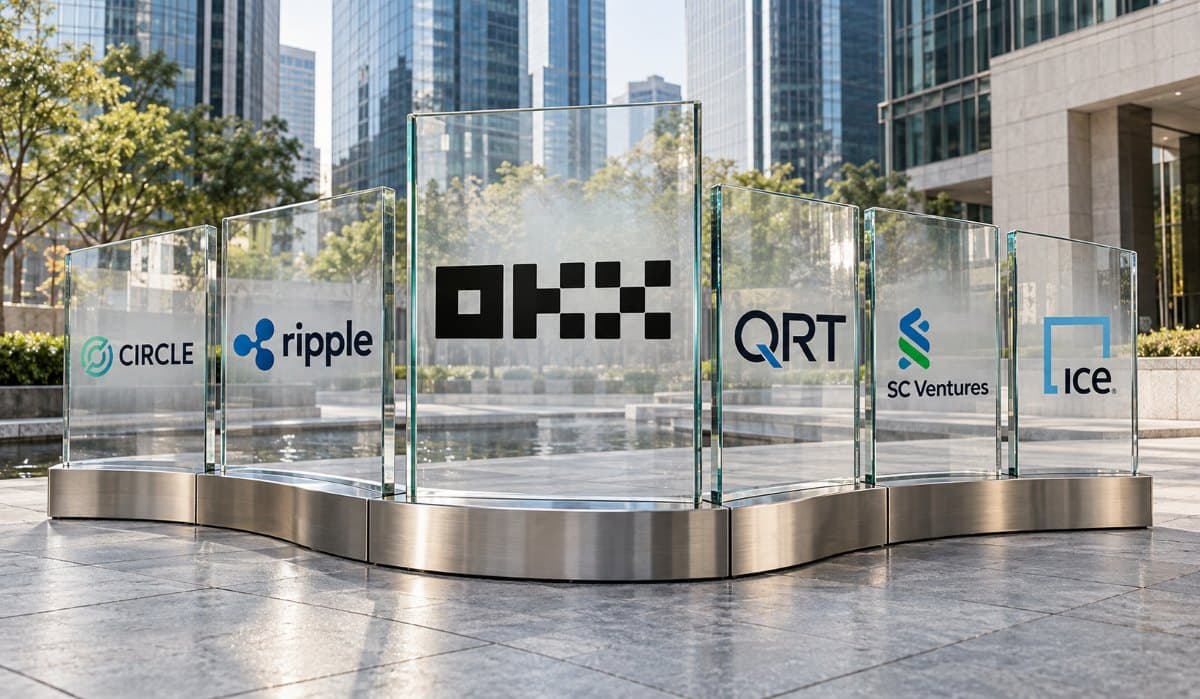
“One Financial System”: What OKX’s New Investors Are Backing
Walid Abou Zaki
Oct 8, 2026
6 min

When Assets Move—or Stop—Without Consent: The Limits of Crypto Wallet Control
Walid Abou Zaki
Sep 29, 2026
6 min
Read More Articles

In the Same Space
Coinbase Takes Crypto Custody Under the Federal Banking Umbrella, Secures Rare Approval
News Desk
Nov 9, 2026
4 min
Hackers Target Banks: Could Crypto Become the Safe Haven?
Chantal Assi
Nov 9, 2026
12 min

USDU Stablecoin Enters Emirates NBD’s Liv Banking App
Walid Abou Zaki
Nov 9, 2026
6 min

Wall Street Goes On-Chain: Justin Sun Brings 20 U.S. Assets to HTX, Declines to Discuss Previous SEC Case
News Desk
Nov 9, 2026
5 min